Welcome to WordPress. This is your first post. Edit or delete it, then start writing!
Blog
-

Post-Quantum Security Is No Longer a Future Problem
Post-quantum security is a current encryption planning issue because stolen encrypted data can be stored now and decrypted later if quantum attacks become practical.
If you lead security, infrastructure, or application delivery, the work is no longer theoretical. Standards now exist, government migration planning is already under way, and major communication platforms have begun deploying post-quantum or hybrid cryptography. This article helps you decide what to inventory, what to prioritize, and how to move without breaking systems that still depend on older public-key cryptography.
Why Is Post-Quantum Security No Longer A Future Problem?
Post-quantum security matters now because the risk starts before a cryptographically relevant quantum computer exists. Long-lived encrypted data can be copied today, stored by an attacker, and targeted later when stronger quantum capabilities become available.
That threat is usually called harvest now, decrypt later. It changes the planning window for sensitive records, intellectual property, government data, financial data, source code, private communications, and long-term identity material. If the data needs confidentiality for ten, fifteen, or more years, waiting for a confirmed quantum breakthrough is a poor risk decision. Migration also takes time because cryptography is spread across applications, libraries, certificates, devices, protocols, vendors, and operational procedures.
The practical signal is also hard to ignore. The National Institute of Standards and Technology (NIST) has finalized its first post-quantum cryptography standards, which gives security teams a stable starting point for planning. The Cybersecurity and Infrastructure Security Agency (CISA) already treats quantum readiness as a live migration topic, and the White House has directed federal agencies to inventory vulnerable cryptographic systems. You don’t need panic, but you do need a plan.
What Does A Quantum Computer Do To Today’s Encryption?
A sufficiently capable quantum computer threatens widely used public-key systems, especially Rivest-Shamir-Adleman (RSA) and elliptic curve cryptography (ECC). It does not break every type of encryption in the same way.
The main concern is asymmetric cryptography, which you use for key exchange, digital signatures, certificates, secure messaging setup, code signing, and Public Key Infrastructure (PKI). RSA and ECC protect many of those functions today. If those public-key systems become breakable, attackers could target past encrypted sessions, impersonate trusted systems, or undermine signatures that prove software and documents came from a valid source. That’s why post-quantum cryptography (PQC) focuses so much on key encapsulation and digital signatures.
Symmetric cryptography is a different case. Advanced Encryption Standard (AES) is not treated the same as RSA or ECC under the post-quantum threat model, though security teams may need to review key sizes and policy choices. Hash functions and message authentication also need review, but the urgent migration pressure sits around public-key algorithms. The right move is to map where asymmetric cryptography appears across your environment before swapping algorithms.
You also need to separate post-quantum cryptography from quantum key distribution. Post-quantum cryptography uses mathematical algorithms designed to run on conventional systems. Quantum key distribution uses quantum physics and specialized infrastructure. Most enterprise migration work focuses on post-quantum cryptography because it can fit into software, protocols, libraries, and hardware security modules as support matures.
What Are The NIST Post-Quantum Standards?
The NIST standards give you named algorithms for post-quantum key establishment and digital signatures. They are the reference point most enterprise and government migration plans will use.
Federal Information Processing Standards (FIPS) 203 defines Module-Lattice-Based Key-Encapsulation Mechanism (ML-KEM), based on CRYSTALS-Kyber. You should think of ML-KEM as the main post-quantum option for general encryption key establishment. It helps two parties agree on shared secrets without relying on RSA or ECC key exchange. That makes it relevant to Transport Layer Security (TLS), Virtual Private Network (VPN) systems, secure messaging, and other protocols that establish encrypted sessions.
FIPS 204 defines Module-Lattice-Based Digital Signature Algorithm (ML-DSA), based on CRYSTALS-Dilithium. FIPS 205 defines Stateless Hash-Based Digital Signature Algorithm (SLH-DSA), based on SPHINCS+. These standards address digital signatures, which matter for certificates, software signing, firmware signing, document signing, authentication flows, and integrity checks. A fourth signature standard, FN-DSA, based on FALCON, is planned as an additional option.
Algorithm names can make this feel harder than it is. Start by matching the job to the standard: ML-KEM for key establishment, ML-DSA for many signature uses, and SLH-DSA where hash-based signatures make sense for your risk profile and operational limits. Your job is not to invent cryptography. Your job is to choose validated implementations, reduce hard-coded dependencies, and prepare systems to support approved algorithms without emergency rewrites.
What Government Timelines Apply To Post-Quantum Migration?
Government guidance already pushes agencies and security teams toward inventory, planning, and staged migration. Private organizations should treat those timelines as planning signals, not as a reason to wait.
The White House National Security Memorandum 10 directs federal agencies to identify systems that use quantum-vulnerable cryptography and prepare for migration. The National Security Agency (NSA) Commercial National Security Algorithm Suite 2.0 gives transition direction for national security systems. CISA provides readiness material for organizations building migration plans. The common message is practical: find vulnerable cryptography, rank systems by data sensitivity and lifespan, and prepare before replacement becomes urgent.
NIST draft guidance also proposes deprecating RSA-2048, Elliptic Curve Digital Signature Algorithm (ECDSA), Edwards-Curve Digital Signature Algorithm (EdDSA), and related finite-field schemes by 2030, then disallowing those schemes after 2035. That document is an initial public draft, so you should not treat it as final policy. Still, it gives you a useful planning horizon. Systems with long procurement cycles, embedded devices, specialized appliances, or long certificate lifetimes need attention well before those dates.
For private-sector teams, the safer reading is simple: compliance deadlines may arrive unevenly, but cryptographic migration rarely moves fast. You may depend on vendors, managed service providers, certificate authorities, cloud platforms, identity providers, and device manufacturers. If you start with inventory now, you can align refresh cycles with post-quantum readiness instead of funding rushed replacement work later.
Where Is Post-Quantum Security Already Deployed?
Post-quantum security is already present in major production systems, mostly through hybrid designs. That means some systems combine traditional cryptography with post-quantum algorithms during the transition period.
Google Chrome enabled hybrid post-quantum key agreement using Kyber768 and X25519 in Transport Layer Security. Apple introduced PQ3 for iMessage as a post-quantum cryptographic protocol. Signal added Post-Quantum Extended Diffie-Hellman (PQXDH) to strengthen secure messaging key agreement. These deployments show that post-quantum work is not limited to labs, academic papers, or future standards meetings.
Hybrid cryptography can be useful during migration because it lets systems keep the protection of established algorithms while adding a post-quantum component. If one side has an implementation defect or compatibility gap, the transition path can be less brittle than a sudden replacement. That does not mean every system must use a hybrid mode forever. It means you should evaluate protocol support, interoperability, performance, and vendor maturity before choosing a migration path.
You should also avoid assuming your browser, phone, or messaging app solves enterprise risk by itself. Your internal services, private application programming interfaces (APIs), VPNs, machine identities, database connections, code-signing pipelines, backup encryption, device certificates, and operational technology may still rely on older public-key algorithms. Consumer platform deployments are proof that the shift has started. They are not a substitute for your own inventory.
How Should You Migrate Systems To Post-Quantum Security?
You should migrate by building a cryptographic inventory, ranking systems by risk, then testing standards-based replacements in controlled phases. Start with the data that needs confidentiality longest and the systems that are hardest to change.
Your first task is discovery. Identify where RSA, elliptic curve cryptography, Diffie-Hellman, Elliptic Curve Diffie-Hellman, ECDSA, and EdDSA appear across applications, certificates, libraries, hardware security modules, appliances, cloud services, source code, container images, mobile applications, and third-party integrations. Don’t stop at internet-facing TLS. Look at internal service-to-service traffic, administrative access, secrets management, identity federation, secure email, file transfer, firmware signing, software release pipelines, and backup systems.
Then rank each use by exposure, data lifetime, replacement difficulty, and vendor dependency. A public website with short-lived session data may rank differently from encrypted archives, regulated records, design files, source code, or signed firmware that must remain trustworthy for years. Long-lived data deserves early planning because harvest now, decrypt later risk applies even if the attacker cannot read the data yet. Long-lived devices also deserve early planning because you may not be able to patch or replace them quickly.
A practical readiness plan can use this order:
- Inventory: map algorithms, key sizes, certificates, libraries, protocols, and owners.
- Classify: rank systems by data sensitivity, confidentiality lifetime, and operational impact.
- Test: pilot ML-KEM, ML-DSA, and supported hybrid modes in non-production environments.
- Measure: compare handshake size, latency, signature size, central processing unit (CPU) cost, and failure rates.
- Upgrade: plan library, hardware security module, certificate authority, and vendor changes.
- Document: record approved algorithms, fallback rules, ownership, and rollback procedures.
What Common Myths Delay Post-Quantum Readiness?
The most common myth is that you can wait until a quantum computer breaks RSA or ECC in public. By that point, data with a long confidentiality lifetime may already have been collected.
Another myth is that post-quantum security requires quantum key distribution. It does not. Most organizations will focus on post-quantum cryptographic algorithms that run in normal software and hardware environments. You may still need new versions of libraries, hardware security modules, gateways, certificate tooling, and managed services, but you do not need to build a quantum network to begin migration planning.
A third myth is that AES is broken in the same way as RSA and ECC. It is not the main migration target. You should still review symmetric encryption policies, key lengths, and cryptographic module validation, but the most pressing replacement work usually lands on public-key exchange and digital signatures. Treating every algorithm as equally broken wastes time and creates confusion.
The final myth is that standards alone solve the operational problem. Standards tell you which algorithms to use, but they do not locate hard-coded cipher suites, replace unsupported appliances, shorten certificate lifetimes, upgrade signing workflows, or train engineering teams. You need crypto-agility: the ability to change algorithms and parameters without rewriting large parts of your systems. If your applications assume one algorithm forever, post-quantum migration will expose that design weakness.
What Should Your Readiness Checklist Include?
Your readiness checklist should turn post-quantum security from a research topic into tracked engineering work. The best checklist assigns owners, deadlines, test plans, and decision points.
Start with governance that is narrow enough to execute. Name the systems in scope, define who owns each cryptographic dependency, and decide which data classes need protection beyond current algorithm lifetimes. Build a cryptographic bill of materials for critical applications and infrastructure. Include vendor products, open-source libraries, certificates, keys, protocols, and signing operations.
Then build engineering lanes. One lane should handle TLS and service communication. Another should cover PKI and certificates. A third should cover code signing, firmware signing, and release integrity. Additional lanes may cover messaging, remote access, storage encryption wrappers, backup protection, and identity systems.
Your checklist should include these operating questions:
- Which systems use RSA, ECC, ECDSA, EdDSA, Diffie-Hellman, or Elliptic Curve Diffie-Hellman?
- Which encrypted data could still be sensitive years from now?
- Which vendors support FIPS 203, FIPS 204, FIPS 205, or hybrid post-quantum modes?
- Which systems can be upgraded through configuration rather than code changes?
- Which certificates, keys, and signatures have long validity periods?
- Which hardware security modules and appliances need replacement or firmware updates?
- Which applications fail when key sizes, signatures, or handshake messages grow?
What Are The NIST Post-Quantum Cryptography Standards?
- FIPS 203: ML-KEM for encryption
- FIPS 204: ML-DSA for signatures
- FIPS 205: SLH-DSA for signatures
- FIPS 206: FN-DSA is planned
Make Post-Quantum Security Part Of Your Normal Engineering Roadmap
Post-quantum security is no longer a distant research topic, and it doesn’t need to become a panic project. You can start with inventory, data lifetime analysis, vendor readiness checks, and controlled pilots using standards-based algorithms. Focus first on public-key cryptography, long-lived confidential data, signing systems, certificates, and hard-to-replace infrastructure. Use hybrid modes where they fit your risk and compatibility needs, but keep your long-term plan tied to finalized standards and validated implementations. The teams that move early will spend their time on measured upgrades; the teams that wait will spend it untangling urgent dependencies under pressure.
References
- NIST: First Three Finalized Post-Quantum Encryption Standards
- NIST Post-Quantum Cryptography Project
- NIST FIPS 203 Final
- NIST FIPS 204 Final
- NIST FIPS 205 Final
- NIST IR 8547 Initial Public Draft
- White House National Security Memorandum 10
- NSA Commercial National Security Algorithm Suite 2.0 FAQ
- CISA Post-Quantum Cryptography Initiative
- Google Security Blog: Chrome Hybrid Kyber Key Encapsulation Mechanism
- Apple Security Engineering Blog: iMessage PQ3
- Signal Blog: Post-Quantum Extended Diffie-Hellman.
-

Big Customer, Bigger Risk: When to Walk Away
You should walk away from a big customer when the account’s profit, payment behavior, demands, or control over your business creates more risk than its revenue can justify. Customer concentration risk becomes especially dangerous when one client supplies more than 20 to 30 percent of your revenue and you have no credible replacement pipeline.
A dominant customer can look valuable on your income statement yet weaken your margins, consume your team’s capacity, and limit your ability to pursue better work. The decision isn’t simply whether you can afford to lose the account. You need to determine whether you can afford to keep serving it under the current terms.
What Is Customer Concentration Risk?
Customer concentration risk is the financial and operational exposure created when one customer provides a large share of your total revenue. The more dependent you become on that account, the more control it gains over your cash flow, staffing, pricing, and business decisions.
A major contract can help you hire people, improve your capabilities, and build credibility. Trouble begins when you shape too much of the company around one customer’s preferences. Specialized processes, dedicated employees, custom systems, and unusual service terms can make the account difficult to replace and expensive to support.
The dependency also changes how you respond to pressure. You’re more likely to accept a discount, rush a project, overlook a late payment, or absorb additional work when saying no puts a large share of revenue at risk. The customer may never openly use that leverage, but your fear of losing the account can still affect every negotiation.
Revenue concentration can also reduce the value of your company. Buyers and lenders generally prefer predictable cash flow spread across a healthy customer portfolio. When one account controls a large portion of sales, the loss of that relationship can create an immediate revenue gap that a new owner or lender cannot easily predict.
How Much Revenue From One Customer Is Too Much?
There’s no universal cutoff for every business, but a customer producing more than 20 to 30 percent of revenue commonly represents high concentration risk. A lower percentage can still be dangerous when the account has poor margins, short contracts, slow payments, or unusually high service demands.
Under United States Generally Accepted Accounting Principles (GAAP), Accounting Standards Codification (ASC) 280 uses 10 percent of total revenue as the threshold for major-customer disclosure. That rule doesn’t mean a 10 percent customer is automatically harmful. It does show that dependence at this level is material enough to deserve attention.
Calculate your revenue concentration ratio by dividing the revenue from one customer by your total revenue for the same period, then multiplying the result by 100. If a customer generated $300,000 of your company’s $1 million in annual revenue, the concentration ratio would be 30 percent. Review the ratio alongside gross margin, payment speed, contract duration, and the cost of serving the account.
Your available capacity matters too. A client representing 25 percent of revenue but consuming 45 percent of staff time creates a larger problem than the revenue ratio reveals. Compare concentration across revenue, gross profit, labor hours, accounts receivable, and management attention to see how dependent the business has become.
What Does Your Biggest Customer Really Cost?
Your largest customer’s real value is the revenue left after direct costs, extra labor, concessions, delays, and lost opportunities. A large invoice total can hide weak profit when the customer receives special pricing, longer payment terms, repeated revisions, or dedicated support.
Start with a client profitability analysis. Subtract direct delivery expenses, contractor costs, account management time, rework, discounts, unreimbursed expenses, and the financing cost of late payments. Include senior leadership time if the relationship regularly pulls owners or executives into preventable disputes.
Then measure opportunity cost. If your best employees spend most of their week responding to one demanding account, they cannot serve other customers or improve standard services. Custom work can also push your business away from repeatable, profitable operations and toward a model built around one company’s internal needs.
Morale belongs in the calculation, even when it doesn’t appear as a separate line on your financial statements. Repeated emergencies, disrespectful communication, changing requirements, and unrealistic deadlines can increase burnout and turnover. Replacing trained employees can cost more than the margin generated by the customer causing the strain.
What Warning Signs Mean The Relationship Is Turning Dangerous?
A big customer becomes dangerous when exceptions turn into standard operating conditions and the account refuses to pay for the added burden. The strongest warning signs usually appear across profit, payment behavior, workload, team health, and strategic control.
Watch for recurring margin erosion. The customer may demand lower prices at renewal, request faster delivery without rush fees, or expect custom features under a standard agreement. One concession may be manageable, but repeated concessions can leave you serving a prestigious account that produces little usable profit.
Payment problems deserve the same attention. Chronic delays, partial payments, unexplained deductions, and repeated invoice disputes place the financing burden on your company. If you must borrow, delay hiring, or postpone vendor payments because a large customer ignores agreed terms, its headline revenue overstates its value.
Scope creep is another direct signal. Informal requests begin replacing written change orders, and your team becomes reluctant to enforce boundaries. The risk rises when the customer also interferes with staffing, demands priority over contracted clients, or expects access to senior leaders for routine work.
Pay attention to what the relationship prevents you from doing. A dominant customer may discourage you from serving competitors, require custom processes that cannot be reused, or consume the capacity needed to build a broader sales pipeline. When protecting one account blocks revenue diversification, the dependence is likely to deepen.
Should You Keep, Renegotiate, Or Walk Away?
Use a four-question audit to choose among keeping the account, renegotiating the agreement, or ending the relationship. Your decision should reflect future economics and risk, not the customer’s past revenue or the time you’ve already invested.
- Is the account genuinely profitable? Calculate profit after discounts, extra service, rework, payment delays, leadership time, and dedicated resources.
- Can the harmful behavior be corrected? Decide whether pricing, scope, deadlines, communication, and payment terms can be reset through a written agreement.
- Would losing the customer threaten the business? Measure the cash reserve, available capacity, sales pipeline, and time required to replace the revenue.
- Does keeping the account support your business direction? Review whether the work builds reusable skills, attracts suitable customers, and fits the services you intend to sell.
Keep the customer when the account earns a fair margin, respects boundaries, pays according to the contract, and supports your business direction. Concentrated revenue still requires monitoring, but a cooperative customer gives you room to reduce dependency without creating an immediate conflict.
Renegotiate when the relationship has commercial value but the current terms no longer work. Present specific changes: updated pricing, shorter payment periods, paid change orders, service limits, named decision-makers, and realistic turnaround times. Set a decision deadline and document the revised expectations rather than relying on verbal assurances.
Walk away when the customer rejects workable corrections, continues harmful behavior, or expects your business to absorb losses for access to its revenue. The case becomes stronger when the account damages employee retention, disrupts other customers, or blocks your ability to diversify. Sunk costs shouldn’t decide your future commitments.
How Do You Reduce Dependency Before Ending The Relationship?
You reduce dependency by building replacement revenue, protecting cash, and untangling resources before sending a termination notice. Unless the situation requires an immediate exit, revenue diversification gives you greater control over timing and negotiation.
Begin by setting a target for your customer mix. If one account supplies 35 percent of revenue, your initial goal may be to reduce that share through new sales rather than cutting the customer immediately. Revenue growth from several smaller accounts can lower concentration without creating an abrupt cash-flow gap.
Strengthen your sales pipeline with offers that use existing capabilities and can be delivered without extensive customization. Reconnect with suitable former customers, review stalled proposals, request referrals, and focus sales activity on industries where your standard service already fits. Avoid replacing one dominant account with another account carrying the same dependency risk.
Build a cash reserve around the expected transition period. Review payroll commitments, vendor contracts, unused subscriptions, discretionary spending, and upcoming tax or debt obligations. Your goal is to know how many months the company can operate if replacement sales arrive later than planned.
Separate the customer from resources it controls indirectly. Cross-train employees, document procedures, recover company-owned materials, and review access to shared systems. If an employee works almost exclusively on the account, prepare a reassignment plan before the relationship ends.
How Do You Exit A Big Customer Without Burning Bridges?
A professional exit requires contract review, written communication, a firm end date, and an orderly transfer of work. Keep the explanation brief and business-focused rather than turning the termination meeting into a list of personal grievances.
Review the agreement before communicating your decision. Confirm notice periods, termination rights, outstanding deliverables, payment duties, confidentiality terms, ownership provisions, and transition requirements. Obtain qualified legal guidance when the contract is unclear, the account is disputed, or the financial exposure is large.
Tell the customer that your company will no longer be able to support the account after a specific date. State what you’ll complete, what the customer must provide, how final billing will work, and which materials will be transferred. Don’t invite an open-ended negotiation if the decision has already been made.
Document the transition in writing. Record open projects, approvals, account balances, customer property, system access, and delivery dates. Assign one person to manage the offboarding process so the customer receives consistent information and your employees aren’t pulled into conflicting side conversations.
During the first 90 days after the exit, monitor cash flow weekly, contact active prospects, and reassign freed capacity to profitable work. Review employee workload and make sure old account habits don’t carry into new relationships. Study how the dependency developed, then update pricing rules, contract standards, approval limits, and concentration targets.
When Should You Walk Away From A Big Customer?
- Discounts or terms erase profit
- They exceed 20–30% of revenue
- Payments are repeatedly late or disputed
- Scope grows without repricing
- The account harms your team or other customers
Build A Business No Customer Can Control
Your biggest customer isn’t automatically your best customer, and losing a large account isn’t automatically a business failure. Measure customer concentration risk alongside profit, payment reliability, capacity use, employee strain, and lost opportunities. Correct the relationship when stronger terms can restore a fair exchange, then set a deadline for measurable change. If the customer refuses and the damage continues, prepare the business and leave professionally. A healthier revenue mix gives you more freedom to price accurately, protect your team, and choose work that supports lasting growth.
References
-

Stop Chasing Forecast Accuracy. Build Forecast Agility Instead
Forecast accuracy is useful, but forecast agility is what protects service, inventory, and cash when demand moves away from the plan. If your team keeps reviewing error after the fact without improving response speed, you’re optimizing the wrong planning muscle.
You’ve probably seen the same monthly planning meeting repeat itself: the forecast missed, the Mean Absolute Percentage Error (MAPE) looks bad, sales defends the number, supply chain explains the constraints, and finance asks why the plan changed again. The problem isn’t that forecasting has no value. The problem is treating accuracy as the finish line instead of building a planning system that adapts quickly when the forecast is wrong.
Why Is Forecast Accuracy A Dead-End Key Performance Indicator?
Forecast accuracy becomes a dead-end Key Performance Indicator (KPI) when it turns planning into scorekeeping. You still need accuracy, but it should support better decisions, not become the decision itself.
MAPE can tell you how far the forecast was from actual demand, but it doesn’t tell you whether the business made a good decision. A forecast can miss and still lead to the right inventory posture if your planners acted early, adjusted buffers, and protected priority customers. A forecast can also look statistically clean and still create poor outcomes if it hides bias, ignores supply limits, or arrives too late to change production. Accuracy alone doesn’t measure usefulness.
This is where many planning teams get trapped. They invest in new software, tune models, and debate overrides, yet the same operational issues keep showing up: stockouts, excess inventory, late decisions, and constant plan churn. The better question is not “How do we make the forecast perfect?” It’s “How do you design the business to recover faster when reality moves?”
Why Does Demand Variability Make Perfect Forecasts Unrealistic?
Perfect forecasts are unrealistic because demand contains noise you can’t fully remove. Promotions, customer behavior, lifecycle shifts, order timing, and supply constraints can all distort the signal before your model sees it.
At Stock Keeping Unit (SKU) and location level, volatility often increases. A national forecast may look stable, but the local picture can swing sharply by customer, channel, region, or fulfillment point. Aggregated demand smooths out noise; execution happens at a more granular level. That gap explains why leadership may see a reasonable top-line plan while planners deal with messy item-level decisions.
Some error comes from fixable issues: poor master data, late sales input, outdated assumptions, and disconnected planning calendars. Some error is structural. Short product lifecycles, long supplier lead times, intermittent demand, and changing customer order patterns make exact prediction less realistic. Forecast agility accepts that reality and focuses on reducing the cost of being wrong.
What Does Forecast Agility Actually Mean?
Forecast agility is the ability to adjust plans, inventory, capacity, and commitments quickly when actual demand differs from the forecast. It shifts attention from prediction quality alone to response speed and decision quality.
A forecast-agile organization still forecasts. It just refuses to treat one number as a promise. You use the forecast as a planning signal, then pair it with demand sensing, scenario planning, supply flexibility, and clear decision rules. When demand moves, your team knows which levers to pull, who approves the change, and how fast the new plan reaches production, procurement, logistics, and finance.
This matters because many supply chains lose time between signal and action. Demand changes on Monday, the exception is reviewed later, the meeting happens after that, and the revised plan reaches execution after the useful window has closed. That lag is decision latency. Reducing it can protect service levels more effectively than chasing another small improvement in forecast accuracy.
What Are The Hidden Costs Of Chasing Accuracy?
Chasing accuracy can create costs that don’t show up in the forecast dashboard. Teams may protect the metric instead of protecting the business outcome.
One common cost is gaming behavior. If planners are judged mainly on accuracy, they may pad numbers, avoid bold assumptions, or push risk into inventory. Sales teams may sandbag demand to look better later, and supply teams may over-buffer to avoid blame. The forecast then becomes a negotiation artifact instead of a shared planning signal.
Another cost is wasted planning effort. Teams spend hours debating decimals, manual overrides, and who caused the error, then leave the meeting without changing lead times, decision rights, or supply options. Forecast Value Added (FVA) analysis was created to test whether planning steps improve the forecast or make it worse. That idea is valuable because it forces you to ask whether each activity adds measurable decision value.
Which Metrics Should Replace Mean Absolute Percentage Error?
MAPE shouldn’t disappear, but it needs company. Better planning scorecards combine forecast error with service levels, bias, Forecast Value Added, decision latency, and inventory outcomes.
Forecast bias tells you whether the organization consistently over-forecasts or under-forecasts. Service level shows whether customers are getting what they need. Inventory turns and obsolete inventory reveal whether the plan is tying up cash. Decision latency measures how long it takes to detect a demand shift, approve a response, and execute the change.
Forecast Value Added is especially useful because it challenges planning rituals. If a statistical baseline is more accurate than a meeting-adjusted forecast, the meeting is not adding value. If a sales override improves the plan for certain categories but hurts others, you can separate where human input helps from where it adds noise. That’s a more useful conversation than asking every planner to explain why demand didn’t behave.
How Do You Build Forecast Agility In Daily Planning?
You build forecast agility by shortening the distance between signal, decision, and execution. That means clearer thresholds, faster reviews, flexible supply options, and shared ownership across commercial, financial, and operational teams.
Start with segmentation. Not every item deserves the same planning treatment. Stable, high-volume products may benefit from statistical forecasting and regular replenishment rules. Intermittent, promotional, or lifecycle-sensitive products need tighter exception management, scenario ranges, and closer commercial input.
Then define decision triggers. A trigger could be a demand spike above an agreed threshold, a forecast bias pattern, a customer order change, a supplier delay, or a service risk. The trigger should connect to a pre-approved action: adjust safety stock, pull forward supply, allocate inventory, review capacity, or freeze changes inside a certain execution window. Agility improves when teams stop reopening every decision from scratch.
Which Tools Support Forecast Agility Without Creating Tool Theater?
Useful tools help you sense change earlier, compare options faster, and act with less delay. Demand sensing, probabilistic forecasting, scenario planning, and Artificial Intelligence (AI) can support agility when process ownership is clear.
Demand sensing uses recent demand signals to update near-term expectations. That can help when customer orders, channel data, or shipment patterns shift faster than the monthly forecast cycle. Probabilistic forecasting gives you a range of possible outcomes instead of a single fixed number. That range helps planners choose inventory and capacity positions based on risk, not false certainty.
AI and Machine Learning (ML) can improve pattern recognition and reduce manual work. McKinsey has reported that AI-enabled demand forecasting can reduce forecasting errors in selected supply chains, but error reduction is not the same as resilience. If your approval process is slow, supplier lead times are rigid, and teams still argue over one number, a better model won’t fix the planning system. Technology works best when it is tied to faster decisions.
What Can Sales And Operations Planning Leaders Do In The Next 90 Days?
Sales and Operations Planning (S&OP) leaders can start by changing what gets reviewed, what gets rewarded, and what gets acted on. A 90-day reset should focus on practical planning behavior, not a full systems replacement.
During the first month, review your current forecast meetings and remove activities that don’t improve decisions. Compare the statistical forecast, sales input, planner overrides, and final forecast to see which steps add value. Also check whether the team is using one agreed demand number or reconciling different versions across sales, finance, and supply chain. Misalignment slows every later decision.
During the second and third months, introduce a small set of agility metrics. Track decision latency for priority exceptions, measure bias by product group, and connect forecast misses to service and inventory outcomes. Build a simple scenario routine for the products or customers that create the largest planning risk. You don’t need a perfect process to start; you need a shorter loop from signal to action.
What Is Forecast Agility?
- Adjust plans fast when demand shifts.
- Reduce decision latency and lead times.
- Measure service, response time, and decision quality.
Build The Planning Muscle That Actually Carries The Business
Forecast accuracy still matters, but it should never be the only score that defines planning success. Your business wins when it sees demand changes sooner, makes decisions faster, and protects service without creating excess inventory everywhere. That requires better metrics, cleaner decision rights, useful tools, and a shared S&OP process that treats the forecast as a signal rather than a promise. Forecast agility gives planners a more practical goal: reduce the cost of being wrong, shorten the response cycle, and build a supply chain that performs when the plan changes.
Reference Links
-

The Customer Concentration Trap That Can Sink a Growing Business
Customer concentration risk occurs when too much of your revenue depends on too few customers, leaving cash flow, operations, and business value exposed to one account’s decisions. A practical warning sign is one customer generating more than 10% of revenue, though the right threshold varies by industry, company size, and contract structure.
Landing a large anchor customer can accelerate growth, fund hiring, and strengthen your reputation. The danger appears when your cost structure, sales plan, and product decisions begin serving that customer at the expense of the wider market. You need to measure the exposure, identify the hidden dependencies, and diversify revenue without neglecting the account that helped you grow.
What Is Customer Concentration Risk, and Why Does It Develop Quietly?
Customer concentration risk is the exposure created when a small number of customers produce a large share of your revenue. The fewer accounts supporting the business, the greater the financial impact if one reduces orders, delays payment, renegotiates terms, or leaves.
The risk often develops during a period that looks healthy. A major account expands quickly, your team responds, and revenue rises without the acquisition costs required to win several smaller customers. Hiring decisions, budgets, and forecasts soon assume that the account’s spending will continue. That assumption can become embedded before anyone formally reviews it.
Concentration also grows when sales capacity shifts toward account service. Your strongest employees spend more time handling custom requests, solving urgent problems, and protecting the relationship. New-customer outreach receives less attention because the anchor account already fills the pipeline. Customer concentration then becomes a structural dependency rather than a temporary sales imbalance.
What Percentage of Revenue From One Customer Is Too High?
A widely used warning sign is one customer producing more than 10% of total revenue. Another signal is your five largest customers generating more than 25%, but these figures are review points rather than fixed legal limits.
Your acceptable level depends on how easily revenue can be replaced. A company with short sales cycles, standardized services, and many qualified prospects can recover faster than a company selling custom projects through year-long buying processes. Contract length, payment reliability, profit margin, switching costs, and market demand also affect the real exposure.
Review the direction of the ratio, not just the current percentage. A customer moving from 8% to 15% of revenue deserves attention, especially if your remaining customer base is growing slowly. You should also compare revenue concentration with gross profit concentration. An account producing 15% of sales could represent a larger share of profit, staff time, unpaid invoices, or planned investment.
Why Does Fast Growth Often Increase Customer Concentration?
Fast growth can increase concentration when one account expands faster than the rest of your customer base. Headline revenue rises, but the business becomes more dependent on that customer with every new order.
The account may ask you to hire employees, reserve production capacity, carry inventory, or build specialized features. Those commitments raise fixed costs before payment arrives. If demand falls, you retain expenses created for revenue that no longer exists. A profitable account can still create cash flow risk when your spending grows around forecasts rather than firm, collectible sales.
Rapid account growth can also hide weakness in customer acquisition. Total revenue may hit its target even as new-customer sales decline. Your team sees strong top-line results, so prospecting problems receive less attention. Track new accounts, pipeline coverage, customer acquisition, renewal rates, and concentration ratios separately to see whether growth is broad or dependent on one buyer.
What Hidden Operational Costs Can an Anchor Customer Create?
An anchor customer can increase your cost-to-serve through custom work, priority support, special pricing, and dedicated staffing. These costs can reduce scalability and make the account less profitable than its revenue contribution suggests.
Custom requests are especially difficult to measure when employees handle them informally. A modified report, unique billing process, extra approval step, or special delivery schedule may look minor on its own. Repeated across departments, those exceptions consume time and create operational errors. Your standard offer slowly becomes harder to deliver because internal systems now support several versions of the same service.
Negotiating power can shift as dependence rises. A major customer may request lower prices, longer payment terms, additional service, or faster delivery because it knows replacing the revenue would be difficult. Saying yes protects short-term sales but can train the account to expect concessions. Track gross margin, employee hours, payment timing, support volume, and customization costs by customer to see the relationship’s real contribution.
How Does Customer Concentration Affect Valuation and Financing?
Customer concentration can lower business valuation because a buyer is acquiring revenue that may disappear after the transaction. Lenders may also restrict credit, request added protections, or examine repayment capacity more closely when one customer supports a large share of cash flow.
A buyer will assess whether the customer relationship belongs to the company or to one founder, salesperson, or account manager. The buyer may also review contract transfer terms, renewal history, pricing, customer profitability, and the time needed to replace lost sales. Weak contracts and relationship dependence increase uncertainty. That uncertainty can reduce the earnings multiple or lead to payment terms tied to future customer retention.
Financing reviews often focus on the same basic question: can the company meet its obligations if the largest account leaves? A long-term contract can help, but it doesn’t remove payment delays, renegotiation pressure, performance disputes, or nonrenewal risk. Strong customer diversification, documented account relationships, healthy margins, and a repeatable sales process make future revenue easier to defend.
How Do You Calculate Your Customer Concentration Ratio?
Divide the revenue from a customer by total company revenue for the same period, then multiply the result by 100. Repeat the calculation for each major customer and for your five largest accounts combined.
Customer concentration ratio = Customer revenue ÷ Total revenue × 100
If one customer produces $600,000 of your company’s $4 million in annual revenue, that account represents 15% of revenue. You should run the same calculation using monthly, quarterly, annual, and rolling 12-month figures when possible. Shorter periods reveal sudden changes, and longer periods reduce distortions caused by seasonal purchases or project timing.
Revenue is only the starting point. Calculate each major account’s share of gross profit, accounts receivable, service hours, inventory commitments, and active sales pipeline. You may discover that a customer producing 12% of revenue holds 30% of outstanding invoices or consumes a much larger portion of senior employee time. A useful concentration review measures financial exposure and operational dependency together.
How Can You Reduce Reliance on One Customer Without Hurting Growth?
You can reduce reliance by growing other revenue sources faster than the anchor account rather than forcing that customer to shrink. Protect the relationship, set limits on unsupported customization, and redirect sales capacity toward customers that fit your standard offer.
During the first 30 days, calculate concentration by revenue, gross profit, receivables, and employee time. Document every process, feature, role, and cost tied to the largest customer. Review contract terms, renewal timing, payment history, relationship ownership, and likely replacement time. Set internal warning levels that prompt a formal review before exposure rises further.
During days 31 through 60, build a sales plan around adjacent customer groups with similar needs. Prioritize buyers you can serve through existing products, delivery methods, and staff rather than creating another collection of custom obligations. Assign employees to new-customer acquisition so anchor-account requests don’t consume all available capacity. Review pricing for special work and charge for services that fall outside the standard agreement.
During days 61 through 90, add concentration measures to your regular financial reporting. Create account coverage so no major relationship depends on one employee, and document customer knowledge inside shared systems. Compare pipeline value with the revenue you would lose if the top account reduced spending. Keep investing in the anchor customer when returns support it, but make every expansion decision with replacement risk and cost-to-serve in view.
What Is Customer Concentration Risk?
- Reliance on too few customers for most revenue
- One customer above 10% is a common warning sign
- A lost account can cut cash flow and valuation
- Diversification reduces key customer risk
Build Growth That Can Survive One Lost Account
A large customer should strengthen your company without becoming its single point of failure. Measure customer concentration risk before revenue growth hides the dependency, then compare sales exposure with profit, receivables, staff time, and custom costs. Long-term contracts can improve predictability, but they can’t replace a diversified customer base and a repeatable sales process. Protect valuable account relationships while building enough pipeline and operational discipline to withstand a reduction in spending. Sustainable growth means no single customer’s decision can determine whether your business keeps moving forward.
References
- Investopedia: Concentration Risk
- Corporate Finance Institute: Customer Concentration Risk
- Divestopedia: Customer Concentration Risk in Business Valuation
- Harvard Business Review: Customer Concentration Research
- McKinsey & Company: Growth, Marketing, and Sales Research
- United States Small Business Administration: Business Guidance.
-

Annual Budgets Are Too Slow. Build a Rolling Forecast Instead
A rolling forecast keeps your financial plan current by updating the outlook on a regular cadence instead of locking the business into one annual budget. It helps you make faster resource decisions, test assumptions sooner, and adjust before small misses become large problems.
If your annual budget takes months to finish and feels stale soon after approval, the issue isn’t discipline. The issue is that a once-a-year planning cycle can’t keep pace with pricing changes, hiring shifts, demand swings, cash needs, and operational constraints. This guide shows you how to move toward continuous planning without losing accountability, control, or executive confidence.
Why Annual Budgets Break Down In Modern Finance
Annual budgets are slow because they ask the business to make detailed commitments far ahead of the conditions those commitments depend on. Sales plans, hiring timelines, supplier costs, interest expense, marketing returns, and cash collections can all move after the budget is approved. By the time finance publishes the final version, business leaders may already know that some assumptions are out of date.
The other problem is behavior. A fixed annual budget can push teams to defend numbers instead of updating them. Department leaders may hold back realistic assumptions during planning, protect unused spend near year-end, or treat the budget as a negotiation rather than a planning tool. That makes variance analysis harder because finance ends up explaining misses against an old target instead of managing the current outlook.
A rolling forecast solves a different problem. It doesn’t ask the business to predict every detail once and live with it for a year. It gives finance a recurring process to refresh the forecast, compare actual performance with current assumptions, and redirect attention to the drivers that changed.
What Is A Rolling Forecast?
A rolling forecast is a financial planning process that updates future projections on a monthly or quarterly basis. When one period ends, you add a new future period, so the business always has a forward-looking view.
Most rolling forecasts look beyond the current fiscal year, often using a 12-month to 18-month horizon. That matters because a normal annual budget can shrink in usefulness as the year progresses. A budget approved in January may only show a few remaining months by late year, but a rolling forecast keeps extending the planning window.
The point is not to rebuild the whole budget every month. You update the drivers that matter most: revenue volume, pricing, headcount, payroll cost, gross margin, operating expenses, capital spending, working capital, and cash flow. A good rolling forecast is lighter than a full budget and more useful than a static plan.
Rolling Forecast Vs. Annual Budget: The Core Differences
An annual budget is usually a fixed financial plan for one fiscal year. A rolling forecast is a recurring estimate of where the business is headed based on current data, updated assumptions, and a forward-looking time horizon.
The difference starts with purpose. A budget often sets targets, authorizes spending, and supports performance reviews. A rolling forecast supports decisions: whether to hire, pause hiring, increase inventory, adjust pricing, reduce discretionary spend, change investment timing, or protect cash. You can still keep an annual budget for governance, but use the forecast to steer the business.
The cadence also changes how people work. Annual budgeting often creates one large planning event that absorbs finance and business teams for weeks or months. Rolling forecasts use a smaller, repeatable planning rhythm. That rhythm makes the process easier to improve because teams can review what worked, adjust assumptions, and refine drivers each cycle.
Rolling Forecast And Annual Budget Comparison
Planning Area
Annual Budget
Rolling Forecast
Time Horizon
Usually one fiscal year
Commonly 12 to 18 months forward
Update Rhythm
Once per year, with occasional reforecasting
Monthly or quarterly
Main Use
Targets, spending authorization, annual control
Current outlook, resource allocation, decision support
Level Of Detail
Often detailed by account, department, and month
Focused on material drivers and decision variables
Business Behavior
Can encourage target negotiation
Encourages assumption review and course correction
Key Benefits Of Rolling Forecasts For Faster Decision-Making
A rolling forecast gives you a current view of expected performance, so decisions don’t depend on a stale annual plan. If demand slows, finance can quantify the effect on revenue, margin, cash, and hiring capacity sooner. If demand improves, leaders can compare the cost and timing of new investments before committing.
It also improves conversations between finance and operating teams. Instead of asking, “Why are you off budget?” you can ask, “Which assumptions changed, and what does that mean for the next several months?” That question moves the discussion away from blame and toward action. It also makes forecast accuracy easier to improve because the business learns which drivers explain the biggest swings.
The benefit is not only speed. Rolling forecasts support better resource reallocation. You can move funds away from lower-return activities, protect projects that still matter, and adjust staffing plans before the gap becomes harder to manage. That is where Financial Planning and Analysis (FP&A) becomes a decision partner rather than a reporting function.
How To Build A Rolling Forecast Step By Step
Start by defining the decision the forecast needs to support. If your biggest concern is cash, the model should focus on collections, payables, payroll, inventory, debt service, and capital spending. If growth planning is the main concern, the model should focus on pipeline conversion, bookings, churn, pricing, capacity, hiring, and delivery costs.
Then choose the level of detail. A rolling forecast fails when finance copies the annual budget structure and updates every account line every month. Keep the model detailed enough to support decisions, but simple enough to maintain. Revenue may need separate drivers by product line or region, but office supplies rarely need the same attention.
Assign ownership for every major driver. Sales should own pipeline and bookings assumptions, operations should own capacity and fulfillment inputs, human resources should own hiring timing and compensation inputs, and finance should own model logic, quality checks, and management reporting. Without clear ownership, the forecast becomes a finance estimate instead of a business forecast.
- Define the forecast purpose: cash planning, growth planning, cost control, investment timing, or executive outlook.
- Select the horizon: choose a forward period that supports decisions beyond the current quarter.
- Identify major drivers: revenue, margin, headcount, operating cost, working capital, and capital spending.
- Set the cadence: monthly for faster-moving businesses, quarterly for more stable operations.
- Create accountability: name the owner for each assumption and require a clear reason for each change.
Choosing The Right Forecast Horizon And Update Cadence
The most common horizon for a rolling forecast is 12 to 18 months because it gives leaders enough visibility to make hiring, spending, and capital decisions. Shorter horizons can work for cash forecasting or tactical expense control. Longer horizons can help with capacity, financing, and strategic planning, but they need simpler assumptions because precision falls as the forecast reaches further out.
Your update cadence should match the pace of change in the business. Monthly updates work well when revenue, cash, demand, or costs move quickly. Quarterly updates can work when operations are stable and the forecast drivers don’t change much during the month. A hybrid process can also work: update revenue, cash, and headcount monthly, then refresh the full operating forecast quarterly.
Don’t confuse cadence with workload. A monthly rolling forecast should not become twelve annual budgets per year. The process should focus on exceptions, material changes, and decisions that need management attention. If the forecast update takes too long, reduce the number of inputs, automate actuals, and shift effort from data collection to assumption review.
Driver-Based Forecasting: The Foundation Of A Useful Rolling Forecast
Driver-based forecasting connects financial results to the operating activities that produce them. Instead of forecasting revenue only as a dollar amount, you forecast the drivers behind revenue: units sold, average price, renewal rate, customer count, utilization, billable hours, or transaction volume.
This makes the forecast easier to explain. If revenue drops, you can see whether the issue came from volume, price, mix, churn, or timing. If payroll rises, you can connect the increase to planned hires, start dates, compensation changes, overtime, or contractor usage. That creates a cleaner bridge between actual results and the next forecast.
Good driver design keeps the model useful. Too few drivers make the forecast vague. Too many drivers make it hard to maintain and harder for leaders to trust. Choose drivers that are measurable, owned by a business leader, linked to financial results, and relevant to decisions management can act on.
Common Rolling Forecast Mistakes And How To Avoid Them
The most common mistake is building a rolling forecast that looks exactly like the annual budget. If every account, department, and monthly line must be reviewed in detail, the process becomes too slow. Use the annual budget for detailed authorization if needed, then use the forecast for the current outlook and key decisions.
A second mistake is changing numbers without documenting assumptions. The forecast should show what changed, why it changed, and who owns the change. A clean assumption log helps finance compare forecast versions, explain movement to leadership, and reduce repeated debates about the same inputs.
A third mistake is tying every forecast update directly to performance evaluation. If leaders feel punished for updating assumptions honestly, they’ll protect the old plan. Keep accountability, but separate target-setting from forecasting where possible. The forecast should tell you where the business is heading, not where people wish it were heading.
Tools And Templates For Rolling Forecasts
You can start a rolling forecast in spreadsheets if the business is small, the model is controlled, and the number of contributors is limited. Spreadsheets are flexible and familiar, but they become risky when many teams submit versions, formulas are hard to audit, or actuals need repeated manual loading. If spreadsheet work consumes the process, the tool is getting in the way.
Dedicated planning tools can help when you need workflow, version control, scenario planning, role-based access, and direct connections to source systems. Enterprise Resource Planning (ERP) systems, planning platforms, and business intelligence tools can all support parts of the process. The right choice depends on your data quality, model complexity, number of contributors, and reporting needs.
A template can help you begin, but it should not decide your process. Build the template around the business drivers, forecast horizon, update cadence, and ownership model you selected. A clean template usually includes actual results, prior forecast, current forecast, variance bridge, driver inputs, assumption notes, and a management summary.
How Rolling Forecasts Change Accountability
A rolling forecast does not remove accountability. It changes what people are accountable for. Leaders remain responsible for results, but they also become responsible for the quality and timeliness of their assumptions.
This distinction matters. If a sales leader sees pipeline conversion weakening, the forecast should reflect that reality before the revenue miss appears in the financial statements. If an operations leader sees capacity constraints, the forecast should show the effect on output, cost, and timing. Honest updates help management act sooner.
You can still keep annual targets, incentive plans, and spending controls. The rolling forecast should sit beside those tools as the current outlook. That gives executives a stable target for accountability and a current forecast for decisions. The two should be compared, but they should not be treated as the same document.
What Is A Rolling Forecast?
- A financial plan updated monthly or quarterly.
- Usually projects 12 to 18 months ahead.
- Adds a new period as one closes.
- Keeps the business outlook current.
Make Planning Faster Without Losing Control
Annual budgets still have a place when you need targets, approvals, and spending discipline, but they move too slowly to be your only planning tool. A rolling forecast gives you a current view of revenue, margin, cost, cash, and capacity, so leaders can act before old assumptions create new problems. Start small, focus on the drivers that matter, assign ownership, and keep the update cycle lighter than the annual budget. The best version is not the most detailed model; it’s the one your leadership team trusts, updates, and uses when decisions need to be made.
References
- Association for Financial Professionals — Rolling Forecasts
- Gartner — Rolling Forecast Resources
- Deloitte — Rolling Forecasts And Continuous Planning
- PwC — Rolling Forecast And Planning Agility
- Harvard Business Review — Who Needs Budgets?
- Corporate Finance Institute — Rolling Forecast
- McKinsey & Company — Strategy And Corporate Finance.
-

Founder-Led Sales: When to Keep Selling and When to Hire
Founder-led sales should continue until your sales motion is repeatable enough for someone else to run without founder magic. You should hire when your time is limiting revenue and you have a documented playbook a capable seller can follow.
You’re balancing two real risks: hiring too early before there’s a process to hand off, or hiring too late and becoming the ceiling on growth. This guide helps you decide when to keep selling, when to make your first sales hire, and what work you should still own after that person joins.
What Founder-Led Sales Actually Means And Why It Wins Early Customers
Founder-led sales means you, the founder, personally own the early customer conversations, discovery calls, demos, pricing discussions, objections, and closing process. It doesn’t mean you’re pretending to be a polished career salesperson. It means you’re using direct customer contact to learn what buyers care about, what they ignore, what makes them hesitate, and what pushes them to commit.
This works early because you can connect product, vision, roadmap, and buyer pain in one conversation. A hired salesperson can repeat a pitch, but you can change the pitch, adjust the product direction, and make informed tradeoffs on the spot. That gives you an edge before the company has a brand, a proven funnel, or a clean sales playbook.
Early-stage selling is also a learning loop. Every call gives you language for your website, objections for your pitch, use cases for your product team, and proof points for future outreach. If you skip that learning and hire too soon, you often hand a salesperson a vague market, a moving product, and a quota they can’t reasonably hit.
The Hidden Costs Of Hiring Sales Too Early
Hiring sales too early usually feels like progress. You get another person making calls, booking meetings, and chasing prospects. The problem is that activity can hide the deeper issue: nobody has figured out why customers buy, which accounts are worth pursuing, or which steps move a deal forward.
A salesperson can amplify a working motion, but they rarely create one from scratch without close founder involvement. If your pitch changes every week, your buyer profile is unclear, and your pricing still shifts deal by deal, the hire is forced to guess. That creates slow ramp time, missed expectations, messy customer handoffs, and the feeling that “sales doesn’t work” when the real issue is missing operating clarity.
There’s also an opportunity cost. Recruiting, interviewing, onboarding, coaching, and managing your first sales hire takes time away from product, customers, and hiring for other roles. If you don’t have enough qualified conversations for that person to work, you’re paying for unused capacity and building pressure around a role that was set up too early.
When To Keep Founder-Led Sales
Keep selling when you’re still learning who your strongest buyers are, why they buy, and which parts of your product story land. At this stage, founder-led sales is not a weakness. It’s your fastest path to useful buyer feedback.
You’re not ready to hire if every deal still depends on your personal reputation, your custom explanation, or your ability to promise product changes in the call. You’re also not ready if you can’t describe your ideal customer in plain language, name the top objections, explain your average sales steps, and identify why recent deals closed or stalled.
Another signal is inconsistent deal quality. If some prospects love the product and others seem confused from the start, you probably need more founder discovery before adding a seller. A salesperson needs a clear hunting ground, a clear reason to reach out, and a clear path from first conversation to close.
When To Make Your First Sales Hire
Make your first sales hire when the process has enough repeatability that another person can run meaningful parts of it without reinventing the message. A common Software as a Service (SaaS) rule of thumb says founders often sell personally into meaningful Annual Recurring Revenue (ARR) before hiring, with one widely cited benchmark around $1 million ARR. Treat that as a reference point, not a universal rule.
The better test is operational. You should see steady deal flow, a recognizable buyer profile, repeat objections, repeat demo paths, and a close process that doesn’t require founder improvisation at every step. If you’re losing good opportunities because you can’t respond fast enough, follow up consistently, or manage enough active pipeline, your time has become a revenue constraint.
You also need enough pipeline for the hire to succeed. One seller sitting around waiting for founder-generated introductions won’t build a sales engine. Before hiring, make sure there are accounts to pursue, conversations to run, and a Customer Relationship Management (CRM) system or equivalent tracking method that shows what’s happening across the pipeline.
How To Build A Repeatable Sales Process Before You Hire
A repeatable sales process doesn’t need to be fancy. It needs to be teachable. Start by documenting the steps you already use: target account selection, outreach, qualification, discovery, demo, proposal, negotiation, close, onboarding handoff, and follow-up.
Then write down what you say and why it works. Capture the opening questions that reveal urgency, the demo flow that creates the best reaction, the objections that appear most often, and the answers that move deals forward. Your goal is not to script a robot. Your goal is to give a new seller enough structure to avoid guessing.
Your first sales playbook should include buyer profiles, disqualifying signals, common use cases, pricing guidance, email templates, call notes, qualification criteria, and sample deal reviews. Keep it practical. A useful playbook helps someone prepare for tomorrow’s calls, not admire a document that nobody uses.
First Sales Hire: Sales Development Representative, Account Executive, Or Vice President Of Sales?
Your first hire should match the bottleneck in your current motion. A Sales Development Representative (SDR) helps create and qualify pipeline. An Account Executive (AE) runs discovery, demos, and closes deals. A Vice President of Sales (VP of Sales) builds and manages a team, which usually comes later than founders expect.
If you have plenty of leads but you’re personally stuck running every call, an AE is often the better first hire. If you can close well but don’t have enough qualified meetings, an SDR may be the right first step. If your motion is still unclear, neither role fixes the problem on its own.
Be careful with hiring a VP of Sales too soon. A senior sales leader can build hiring plans, manage managers, set targets, and create team accountability, but they still need a proven motion to scale. If you need someone to carry a bag, learn fast, and work directly with you, hire an operator before hiring an executive.
Transitioning Founder Accounts And Knowledge To A Sales Team
Transitioning accounts should be gradual. Don’t disappear after the offer letter is signed. Let the new seller shadow your calls, review your notes, hear your objection handling, and understand how you frame urgency with buyers.
After shadowing, reverse the roles. Let the seller lead the call as you observe, then give specific feedback on discovery quality, buyer control, next steps, and deal risk. This is where your founder knowledge turns into company knowledge instead of staying trapped in your head.
Customer relationships also need careful handoff. For active deals, introduce the seller as a partner in the buying process, not as a replacement for you. For existing accounts, explain who owns day-to-day communication, when you’ll still be involved, and how customer feedback will continue reaching the product team.
What Sales Activities Founders Should Keep After Hiring
Hiring sales doesn’t mean you stop selling. It means you stop owning every sales motion yourself. You should still join important customer conversations, especially when the deal teaches you something about product direction, pricing, positioning, or a new market segment.
Keep ownership of strategic relationships, early enterprise conversations, lost-deal reviews, and product feedback patterns. These activities help you detect when the market is shifting or when your pitch no longer matches what customers need. Your seller can manage the process, but you still need direct exposure to the market.
You should also stay involved in coaching. Review calls, read notes, inspect pipeline quality, and help sharpen messaging. The goal is not to micromanage. The goal is to turn founder-led sales into a repeatable company capability instead of a personal performance act.
A Stage-By-Stage Founder-Led Sales Decision Guide
In the earliest stage, you should sell personally because you’re still finding the right buyer, use case, language, and urgency. Your job is to learn quickly, close early customers, and document what repeats. Don’t rush to outsource the work that teaches you how the market thinks.
In the next stage, you should begin separating tasks. Keep founder ownership of discovery-heavy calls and strategic deals, but start handing off research, follow-up, scheduling, CRM hygiene, and repeatable demos. This prepares the business for a hire before you commit to one.
Once your process repeats, your time is constrained, and the pipeline can support another person, make the first hire. Start with a role tied to the bottleneck, then build the operating system around that person: weekly pipeline reviews, call coaching, playbook updates, and clear success measures. Founder-led sales should fade from daily execution, not disappear from the company.
When Should A Founder Stop Selling?
- Keep selling until deals repeat.
- Hire when time blocks revenue.
- Hand off a documented playbook.
- Start with an AE or SDR before a VP of Sales.
The Smart Handoff From Founder Seller To Sales Team
Founder-led sales works best when you treat it as market learning, not just early revenue work. Keep selling until you can explain who buys, why they buy, how deals move, and what a new seller should do each week. Hire when your calendar is slowing revenue and the process is documented enough for someone else to execute. Your first sales hire should extend the motion you’ve proven, not rescue one you haven’t built. The strongest transition keeps you close to important customers and coaching, while removing you from every routine call, follow-up, and demo.
References
-

Your First 10 Customers Matter More Than 10,000 Followers
Your first 10 customers matter more than 10,000 followers because paying customers prove demand, expose real objections, and create revenue you can learn from. Followers show attention; customers show willingness to trust your product with money.
If you’re building a business, a large audience can feel like the safest place to start. It’s visible, measurable, and easier to celebrate than a hard sales conversation. But if the goal is to build something people buy, your early customers give you the proof, feedback, testimonials, and referrals that follower growth can’t replace.
This article breaks down why early paying customers beat social reach, what counts as a real customer, how those buyers help you find product-market fit, and how you can find them without a large audience.
The Difference Between A Follower And A Customer
A follower has given you attention. A customer has made a buying decision. That difference changes everything because attention is easy to collect, but payment requires trust, urgency, and a problem worth solving.
Followers can like your content because it’s interesting, entertaining, or relatable. They can agree with your ideas and still never buy. Customers behave differently because they compare your offer against their money, their time, and the alternatives already available to them.
When you confuse followers with customers, you start optimizing the wrong signals. You measure impressions, comments, and subscriber counts, then assume the market wants what you’re building. A sale gives you a sharper signal because someone moved from passive interest to action.
Your first 10 customers also force you to speak in concrete terms. You can’t hide behind branding or broad content themes. You need to explain who the product helps, what problem it solves, why it’s worth paying for now, and what happens after someone buys.
Why 10,000 Followers Can Still Mean Zero Revenue
A big follower count can create momentum, but it doesn’t prove a business model. You can have social reach and still miss the actual buying trigger. The people who enjoy your posts may not have the problem your product solves, may not have budget, or may not trust the offer enough to act.
This is why audience building can become a comfortable hiding place. Content feels productive because it creates visible activity every day. Sales feels harder because it brings rejection, silence, objections, and direct feedback about whether your offer makes sense.
CB Insights has reported “no market need” as one of the top reasons startups fail, often cited around 35 percent in its startup failure research. That point matters here because a follower count doesn’t prove market need. Paying customers get closer to the truth because they show that the problem is painful enough to justify a purchase.
There’s nothing wrong with building an audience. The mistake is treating the audience as validation before anyone buys. Revenue, retention, referrals, and repeat usage tell you far more about whether the business can stand on its own.
What Counts As A Real “First 10 Customers”
A real early customer is someone who pays for the product or service because they believe it solves a real problem. Free users, casual supporters, friends testing out of loyalty, and discounted favors can teach you something, but they don’t carry the same weight. Your first 10 customers should represent demand, not politeness.
Ideally, these customers pay a real price or commit to a serious pilot with clear buying intent. They don’t need to come from a large campaign. They can come from direct outreach, referrals, professional communities, local networks, founder-led sales calls, or a small email list.
You’re looking for people who would notice if the product disappeared. That doesn’t mean they need to love every feature on day one. It means the problem is real enough that they’re willing to work through rough edges, give feedback, and keep using the product when it helps them get a job done.
Be careful with vanity validation at this stage. “I’d use this” is not the same as “I’ll pay today.” “This looks cool” is not the same as an invoice paid, a subscription started, or a deposit placed. Your first 10 customers should leave a financial trace.
How Your First 10 Customers Prove Product-Market Fit
Your first 10 customers don’t prove that the business can scale. They prove that a real segment of people has a problem and sees your product as a possible answer. That’s the starting signal you need before spending more time on content, ads, partnerships, or broad campaigns.
Product-market fit begins with repeated patterns. If several customers describe the same pain, buy for similar reasons, ask for related outcomes, and keep using the product, you’re learning where the market is pulling you. If every customer needs a different pitch, a different feature, and a different price, the offer still needs work.
Early customers also help you separate loud requests from buying reasons. A follower may suggest features without any stake in the outcome. A paying customer’s feedback has more weight because they’re living with the product and judging whether it earns its place in their workflow or routine.
For a Software as a Service (SaaS) product, this may show up in onboarding calls, activation behavior, usage patterns, and renewal conversations. For a service business, it may show up in the objections prospects raise before signing and the outcomes clients ask you to prioritize. For a consumer product, it may show up in repeat purchases, referrals, reviews, and how quickly people explain the product to someone else.
What Those 10 Customers Give You That Followers Can’t
Your first 10 customers give you evidence you can use. They reveal whether your price feels fair, whether your promise is clear, whether onboarding works, and whether the product solves the problem you thought it solved. Followers can give opinions, but customers give operating data.
They also give you language. The words customers use to describe their pain often become stronger sales copy than anything you write alone. Their objections show you what your website needs to answer, what your pitch needs to clarify, and what proof future buyers will ask for.
Early customers can become your first testimonials, case studies, referral sources, and repeat buyers. That social proof is stronger than a large follower count because it comes from people who have gone through the buying process. A testimonial from a real buyer can reduce doubt in a way that a like count cannot.
They also teach you what to build less of. Many founders keep adding features because the product feels unfinished. Customers help you see which parts create value and which parts only add complexity. That can save months of product work and prevent you from polishing something people don’t want.
Common Myths That Keep Founders Chasing Followers Instead Of Sales
One common myth is that you need a big audience before you can sell. You don’t. You need a clear buyer, a specific problem, a credible offer, and a way to reach people directly.
Another myth is that your product must look polished before anyone pays. Early customers often care more about the result than the surface. If the problem hurts enough and you can solve it manually, personally, or with a lean product, you can start learning before everything looks perfect.
Founders also assume the first 10 customers don’t matter because the work doesn’t scale. Paul Graham’s “Do Things That Don’t Scale” argues the opposite: early founders often need to recruit users manually. Manual work helps you learn the market before you turn the process into repeatable systems.
There’s also the trust objection: “People won’t buy without an audience.” Some won’t. But many buyers trust relevance, clarity, proof, and personal attention more than follower count. A direct conversation with the right person can outperform months of generic posting.
A Step-By-Step Playbook To Find Your First 10 Customers This Month
Start with a narrow buyer profile. Don’t define your market as “small businesses,” “creators,” “busy parents,” or “founders.” Define the person with the problem, the situation that creates urgency, the current alternative they use, and the reason your offer should matter now.
Then make a short list of reachable prospects. Use your existing network, professional groups, niche communities, past colleagues, local contacts, warm referrals, and targeted direct outreach. You’re not looking for scale yet. You’re looking for conversations with people who match the problem closely.
- Write one clear offer: State the problem, the outcome, the buyer, and the next step.
- Send direct messages: Keep them short, specific, and personal.
- Book discovery calls: Ask about the problem before pitching the solution.
- Sell a simple version: Offer the smallest paid version that creates a real result.
- Onboard manually: Watch where people get stuck, then fix the process.
- Ask for feedback: Look for repeated objections, repeated praise, and repeated confusion.
- Request referrals: Ask satisfied customers who else has the same problem.
If you’re building a business-to-business (B2B) product, founder-led sales calls can teach you what buyers care about, who controls budget, and what language moves the deal forward. If you’re selling a service, direct outreach and referrals often work faster than posting every day. If you’re selling a consumer product, sampling, niche communities, small events, and referral loops can help you reach early adopters without needing a large platform.
When Followers Actually Start To Matter After You Have Customers
Followers start to matter when you already know what converts. At that point, content can amplify a message that has been tested through real sales. Your audience becomes a distribution channel instead of a substitute for customer development.
This is where Kevin Kelly’s “1,000 True Fans” idea becomes useful. A creator or founder can build a strong business around a smaller group of people who buy, return, and support the work. But you still need the first buyers before you can talk seriously about true fans.
Once you’ve sold to early customers, your content can become sharper. You know which pain points matter, which objections block action, which outcomes people value, and which stories create trust. That makes every post, email, landing page, and sales page more grounded.
At that stage, audience building can help you capture demand, educate future buyers, and create referral momentum. But it works best after customer conversations have shaped the offer. The right order is simple: sell, learn, refine, then amplify.
Why Do Your First 10 Customers Matter More?
- First 10 customers pay you, proving real demand.
- They give direct feedback, testimonials, and referrals.
- They reveal product-market fit and what to build next.
- Followers show reach, not willingness to pay.
Build The Business Before You Build The Crowd
Your first 10 customers are not a small milestone. They are the first real test of whether your offer can survive outside your own head. A large audience can help later, but early paying customers give you revenue, buying reasons, objections, referrals, testimonials, and product direction. If you’re stuck choosing between another month of content and ten direct sales conversations, choose the conversations. Reach can wait; customer proof gives you something worth amplifying.
References
- Paul Graham, “Do Things That Don’t Scale”
- Y Combinator Startup Library, “How To Get Your First Customers”
- Kevin Kelly, “1,000 True Fans”
- CB Insights, “The Top 12 Reasons Startups Fail”
- Stripe Atlas, “How To Get Your First 10 Customers”
- Steve Blank, Customer Development Resources
- Rob Walling, Startup And Founder Resources.
-

Seller Concessions Are Back: What Homebuyers Should Ask For
Seller concessions are buyer costs the seller agrees to pay at closing, and they’re worth asking for when listings sit longer, mortgage rates stretch your budget, or inspection issues come up. The strongest asks reduce your cash to close or monthly payment without creating loan-limit, appraisal, or offer-strength problems.
If you’re buying now, you need to know which credits help the most, which ones lenders allow, and when a price cut beats a seller-paid credit. You also need to ask in a way that gives the seller a reason to say yes. Use this guide to compare closing cost credits, mortgage-rate buydowns, repair credits, prepaid costs, and other negotiable items before you write or revise an offer.
Why Seller Concessions Are Back In Today’s Housing Market
Seller concessions tend to return when buyers have more room to negotiate. When mortgage payments feel tight and homes don’t sell immediately, sellers often look for ways to keep a contract together without cutting the public list price. A concession can solve that problem by helping you pay closing costs, reduce your interest rate, or address inspection findings. Redfin has reported that seller concessions have reached a high share of transactions in its data, showing that these credits are no longer rare in many markets.
This doesn’t mean every seller will offer money back. A well-priced home in a low-inventory neighborhood can still draw strong interest, and a large credit request can put your offer behind cleaner ones. The opportunity is strongest when a property has been sitting, the seller already reduced the price, the inspection uncovers repairs, or similar homes nearby are also offering credits. Your agent and lender should help you judge whether the seller has enough motivation and whether your loan allows the credit you want.
What Homebuyers Should Ask For: Seven Negotiable Seller Concessions
The best seller concessions solve a real buyer problem. If your main pressure is cash to close, ask for a closing cost credit. If your main pressure is the monthly payment, compare a mortgage-rate buydown against a lower price. If the home needs work, an inspection-based credit can be cleaner than asking the seller to complete repairs before closing.
Closing Cost Credit: This is often the most useful ask for first-time buyers. It can help cover lender fees, title costs, escrow setup, recording fees, prepaid interest, and other approved closing expenses. A common target is often around two to three percent of the sale price, but your lender must confirm the limit for your loan. You cannot receive unused seller credit as pocket cash after closing, so the amount should match eligible costs.
Mortgage-Rate Buydown: A seller-paid buydown can reduce your interest rate, either for the early years of the loan or for the life of the loan. A temporary buydown can make the first year or two easier, which helps if you expect your income or budget to improve. A permanent buydown may be better when you plan to stay in the home longer and want payment savings that continue. Ask your lender to compare the monthly payment and total cost against a simple price reduction.
Repair Credit After Inspection: If the inspection finds roof wear, plumbing issues, electrical concerns, heating and cooling problems, or safety items, you can ask for a seller credit instead of repairs. A credit gives you more control over who does the work after closing. Some loan programs require certain repairs to be completed before closing, especially if the issue affects safety or property condition. Your agent should separate lender-required repairs from negotiable repairs.
Prepaid Property Taxes And Homeowners Insurance: Your escrow account may need funding at closing, and that can surprise buyers who already saved for a down payment. A seller credit can sometimes help with prepaid property taxes, prepaid homeowners insurance, and initial escrow deposits. This type of concession reduces the cash you need on closing day. It does not reduce your loan balance, so compare it with a price cut if long-term cost matters more than upfront cash.
Homeowners Association Fees And Transfer Costs: If you’re buying a condominium, townhouse, or planned-community home, ask whether the seller can pay homeowners association transfer fees, document fees, move-in fees, or several months of dues. These costs can be smaller than lender fees, but they still affect your cash to close. The seller may be more willing to cover them because they feel tied to the property sale. Confirm that the association and settlement agent classify the fee correctly.
Home Warranty: A home warranty is a common seller-paid item, especially when the home has older systems or appliances. It can offer limited repair or replacement coverage after closing, subject to the plan terms. Don’t treat it as a substitute for a thorough inspection or a repair credit on known problems. It works best as a small extra ask when the seller resists a larger credit.
Appraisal Gap Price Adjustment: A low appraisal can disrupt your financing if the contract price is above the lender-supported value. Instead of asking for vague “appraisal gap coverage,” ask for clear language that says how the price or credit will be handled if the appraisal comes in low. The seller may agree to reduce the price, split the difference, or reopen negotiations. This is not always treated the same way as a standard seller concession, so your lender must review the wording before you sign.
How Much Can A Seller Pay? Concession Limits By Loan Type
Seller concessions are limited by your mortgage program, property type, occupancy, and down payment. The seller can agree to a large number in the contract, but the lender can still reduce the usable credit if it exceeds program rules or eligible closing costs. That creates frustration late in the process, especially when buyers assume every dollar will reduce cash to close. Ask your lender for your maximum seller credit before you submit the offer.
Here is the practical rule: the contract, loan estimate, and closing disclosure need to line up. The credit must appear in the purchase agreement and closing paperwork, and it cannot be handled as cash outside closing. If the seller credit is larger than your eligible costs, the excess usually goes unused or must be restructured in a lender-approved way. That’s why a smaller, precise credit can be stronger than a large credit that creates underwriting problems.
Common Seller Concession Limit Guide
Loan Type
Common Seller Concession Rule
What You Should Confirm
Conventional Loan
Often ranges from 3% to 9%, depending on down payment, occupancy, and loan details.
Ask whether your down payment level changes the cap.
Federal Housing Administration (FHA) Loan
Commonly allows seller contributions up to 6% of the sale price, subject to program rules.
Confirm that the credit is used only for eligible costs, not the down payment.
United States Department Of Veterans Affairs (VA) Loan
Can be more flexible for customary closing costs, with separate rules for certain concessions.
Ask your VA lender how closing costs, prepaid items, and other concessions are counted.
United States Department Of Agriculture (USDA) Loan
Often has seller contribution limits similar to other government-backed programs, subject to lender rules.
Confirm current program rules and any lender overlays before writing the offer.
Seller Concessions Vs. Price Reduction: Which Saves You More?
A seller credit helps most when you need to preserve cash at closing. A price reduction helps most when you want to lower the loan amount and reduce long-term interest. The tricky part is that a $10,000 credit and a $10,000 price cut do not feel the same on closing day. The credit can directly reduce approved closing costs, but the price cut may only change your monthly payment by a smaller amount.
Use this test before you choose. If you’re short on cash to close, a seller credit usually does more immediate good. If you have enough cash and plan to own the home for many years, a lower price may be cleaner. If your payment is the problem, ask your lender to compare a temporary buydown, permanent buydown, and price reduction side by side.
The appraisal also matters. If the contract price is padded to create room for a credit, the appraised value still has to support the price. A seller can’t simply raise the price and hand you the difference without lender review. When the home is already priced near the top of comparable sales, a price cut may be safer than a large credit. When the value is well supported and you need cash relief, seller concessions can work better.
How To Ask For Seller Concessions Without Losing The Offer
Start with the seller’s position. If the home has been listed for a short time and already has strong activity, a large concession request can make your offer look weaker. If the listing has been sitting, recently reduced, or returned to market after a canceled contract, your request may feel reasonable. The best offer explains the credit in clean contract language and keeps the rest of the terms easy to accept.
Use your lender before you use your leverage. Ask the lender for your estimated closing costs, maximum allowable seller credit, and the best use of that credit. Then have your agent structure the offer with a clear number and purpose, such as a seller credit toward buyer closing costs and prepaid items. That sounds more serious than a vague request for “help with costs.”
You can also trade terms. A seller may accept a credit if you offer a flexible closing date, a shorter inspection window, or a strong earnest money deposit. Don’t waive protections just to win the credit, but do remove friction where it doesn’t harm you. The cleaner the offer feels, the easier it is for the seller to focus on net proceeds rather than the concession itself.
When To Ask Before The Offer Or After The Inspection
Ask before the offer when the need is predictable. Closing cost credits, rate buydowns, prepaid costs, homeowners association fees, and home warranties can be part of your opening offer. That gives the seller a full view of the deal from the start. It also lets your lender review the language before the contract is signed.
Ask after the inspection when the request is tied to new information. If the inspection reveals a material defect, a repair credit can be a fair way to keep the deal moving. Sellers often prefer a credit because they don’t have to manage contractors before closing. You get control after closing, but you also take responsibility for completing the work correctly.
Be careful with visible issues. If the worn carpet, aging appliances, or damaged fence was obvious when you wrote the offer, the seller may push back on a later credit request. Inspection negotiations work best when they address conditions you could not fully evaluate before going under contract. Your agent should help you decide when a repair request is legitimate and when a lower initial offer would have been cleaner.
Common Mistakes Buyers Make With Seller Concessions
The first mistake is asking for more than your loan allows. If your lender caps the credit at a certain percentage or eligible cost amount, the seller’s extra contribution may not help you. That can lead to last-minute contract changes and tension before closing. Get your limit in writing from your lender early.
The second mistake is using seller concessions to hide affordability problems. A temporary rate buydown can reduce your payment for a limited period, but you still need to qualify under lender rules and prepare for the payment after the buydown period ends. If the regular payment strains your budget, treat that as a warning. A seller credit can help with cash flow, but it doesn’t turn an unaffordable home into a safe purchase.
The third mistake is ignoring appraisal risk. A large credit can be fine when the sale price is supported by comparable sales. It becomes harder when the contract price is above market and the credit appears to inflate the deal. Ask your agent for comparable sales, recent price reductions, and buyer demand before choosing between a credit and a lower price.
What Seller Concessions Should You Ask For?
- Seller-paid closing costs, often 2–3% of price
- Temporary or permanent rate buydown
- Inspection repair credit
- Home warranty or prepaid association fees
Ask For The Credit That Solves The Real Problem
Seller concessions work best when you know exactly what you’re trying to improve: cash to close, monthly payment, repair risk, or deal certainty. Don’t ask for a random number just because concessions are back in more transactions. Ask your lender what the loan allows, ask your agent what the local market supports, and compare every credit against a lower purchase price. A smart concession request gives the seller a deal they can accept and gives you a closing statement that fits your budget. That’s the balance you’re aiming for.
Reference Links
- Redfin News: Seller Concessions Report
- National Association Of Realtors: Realtors Confidence Index
- Freddie Mac: Primary Mortgage Market Survey
- Bankrate: Seller Concessions
- Investopedia: Seller Concessions
- United States Department Of Housing And Urban Development: FHA Single Family Housing
- Consumer Financial Protection Bureau: Owning A Home.
-
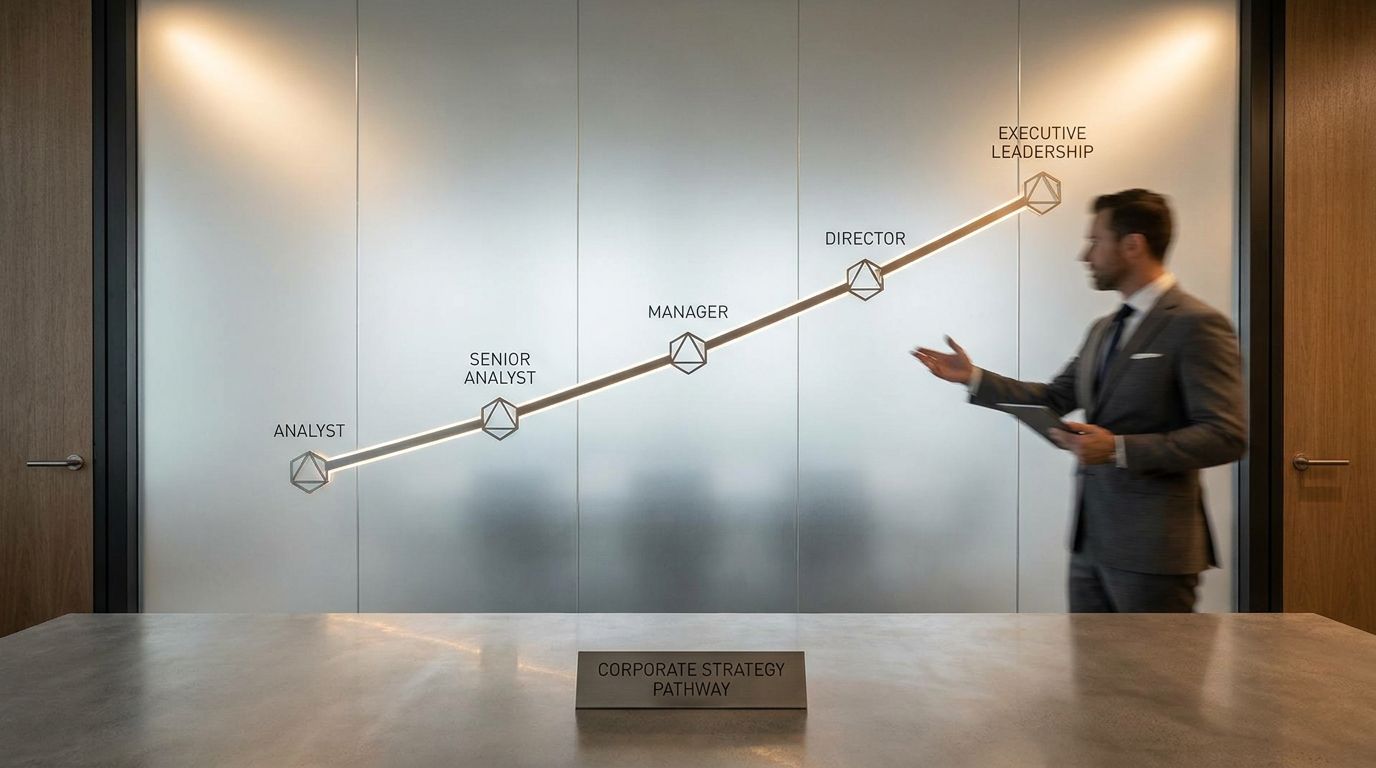
Corporate Strategy Career Path: From Analyst to Executive Leadership
A corporate strategy career moves from analysis to influence: you start by sizing markets and building models, then progress toward leading enterprise priorities, advising executives, and setting the company agenda.
If you’re looking at this path from an analyst seat, consulting role, business unit, or graduate program, the titles only tell part of the story. The real progression depends on how well you connect analysis to decisions, earn trust with operators, and move from recommending strategy to owning outcomes.
What Does Corporate Strategy Actually Do?
Corporate strategy defines where a company should compete, how it should allocate resources, and which priorities deserve executive attention. Your work sits between analysis, planning, corporate development, operating decisions, and leadership communication.
At the analyst level, the job often looks like market research, competitor tracking, financial modeling, customer analysis, and slide preparation. You may build market sizing models, compare growth options, or help prepare materials for annual planning and board discussions. The work can feel abstract if you’re far from implementation, so the strongest analysts learn how business unit leaders use the recommendations. That curiosity separates basic research from decision-ready strategy work.
As you advance, the role becomes less about producing the cleanest deck and more about helping leaders make trade-offs. You’ll evaluate which growth bets deserve funding, where mergers and acquisitions(M&A) could support the plan, and which initiatives need executive sponsorship. Deloitte describes the modern strategy function as one that increasingly connects strategic planning with execution, operating rhythms, and enterprise priorities. That shift matters for your career because promotion comes from helping the company act, not just helping it think.
What Is The Typical Corporate Strategy Career Ladder?
The typical corporate strategy career ladder runs from Strategy Analyst to Senior Analyst or Associate, Manager, Director, Vice President, and Chief Strategy Officer(CSO). The work changes at each level, moving from analytical support to initiative leadership and executive agenda-setting.
As a Strategy Analyst, you usually spend your first years gathering data, building models, preparing competitive scans, and creating materials for senior leaders. Senior Analysts and Associates begin shaping the answer, not just collecting the inputs. At the Manager or Senior Manager level, you lead workstreams, coordinate with finance, product, sales, operations, and regional teams, and turn ambiguous questions into structured recommendations. This is where your reputation starts to depend on judgment, not just technical accuracy.
At Director level, you own larger strategic initiatives and become accountable for alignment across functions. You may lead growth strategy, portfolio reviews, market entry work, pricing initiatives, or planning processes tied to the company’s operating model. Vice Presidents and Heads of Strategy spend more time advising the senior executive team, shaping resource allocation, and coordinating strategic priorities across the enterprise. A Chief Strategy Officer sets the strategic agenda with the Chief Executive Officer(CEO), connects planning to execution, and often influences M&A, partnerships, transformation programs, and capital allocation.
How Long Does It Take To Move From Analyst To Executive Leadership?
A linear path from Analyst to Vice President often takes around 12 to 15 years, and reaching Chief Strategy Officer often requires 15 or more years of experience. You can move faster by combining strategy roles with consulting, business unit leadership, corporate development, or general management experience.
The first promotion step can be fairly predictable if your company has a defined strategy team structure. Analyst to Senior Analyst or Associate often depends on technical excellence, speed, accuracy, and your ability to communicate findings without burying the answer. Moving into Manager requires a different skill set: you need to lead workstreams, manage stakeholders, and protect the team from unclear requests. Many people stall here because they keep acting like the smartest analyst in the room instead of building the operating habits of a leader.
The move from Director to Vice President is usually less formal and more political in the practical business sense. You need sponsors, a record of decisions influenced, and enough credibility with business leaders that executives want you involved before a decision is nearly made. Business unit rotations can speed that shift because they give you operating credibility and exposure to Profit and Loss(P&L) trade-offs. If you want the Chief Strategy Officer track, you’ll need more than strategy skill; you’ll need board-level communication, enterprise judgment, and the ability to move leaders who don’t report to you.
What Skills Matter Most At Each Stage?
The skills that matter early are analytical: financial modeling, market sizing, research quality, data interpretation, and clear presentation. The skills that matter later are influence, executive communication, business judgment, and ownership of strategic initiatives.
Early in your corporate strategy career, hard skills give you credibility. You should be comfortable with financial statements, valuation logic, competitive analysis, customer segmentation, and scenario planning. Data tools can also help, especially Structured Query Language(SQL), Tableau, spreadsheet modeling, and basic analytics methods. The goal isn’t to look technical for its own sake; it’s to answer business questions faster and with fewer blind spots.
As you move up, your communication skill becomes a career multiplier. Executives rarely need every step of your analysis; they need the decision, the trade-offs, the risk, and the recommended path. Influence without authority also becomes central because strategy teams often coordinate work across departments without owning those teams directly. The strongest professionals learn how to translate strategy into operating choices: budget shifts, hiring priorities, product sequencing, market focus, pricing changes, and performance measures.
Do You Need A Master Of Business Administration Or Consulting Background?
A Master of Business Administration(MBA) and consulting background can help, but they aren’t the only way into corporate strategy. Many companies also hire from finance, product, operations, analytics, corporate development, and internal leadership programs.
Consulting remains a common feeder because it trains people to structure ambiguous problems, work with executives, build board-ready materials, and move quickly across industries. Large consulting firms and Big Four advisory practices can give you a recognizable resume signal, especially for Manager-level strategy roles. An MBA can also help if you’re changing careers, targeting larger companies, or moving from a technical role into enterprise strategy. These credentials reduce friction, but they don’t guarantee progression once you’re inside the company.
If you don’t have the classic background, build proof through projects that look like strategy work. Lead a market entry analysis, pricing review, product portfolio assessment, operational improvement plan, or customer profitability study. Partner with finance to understand P&L drivers, then show how your work changed a decision. Hiring managers respond well when you can say, with precision, what business question you answered, what options you compared, and what decision your work supported.
Can You Break Into Corporate Strategy Without Traditional Credentials?
Yes, you can break into corporate strategy without a top consulting brand or elite graduate degree. Your best path is to build a portfolio of strategy-adjacent work inside a function where you already have credibility.
Internal transfers are often more realistic than cold applications. If you work in finance, product, sales operations, business analytics, supply chain, or marketing, look for projects tied to planning, growth, resource allocation, customer economics, or market prioritization. Volunteer for cross-functional initiatives where senior leaders need analysis and coordination. Over time, you can become the person leaders trust when a messy business question needs structure.
Your resume should avoid vague claims like “supported strategy.” Use precise language around the type of problem, decision, and outcome. Strong examples include building a market prioritization model, supporting a pricing change, analyzing acquisition targets, redesigning a planning process, or leading a revenue growth initiative. If your company has a strategy rotation program, leadership development track, or internal project office, those can act as bridges into the central strategy team.
What Pitfalls Stall A Corporate Strategy Career?
The most common career stalls happen when you stay too close to analysis, avoid operating ownership, or become known as a deck builder instead of a decision partner. To keep progressing, you need to connect strategy with execution and build trust beyond the strategy team.
One risk is becoming a permanent staff-function expert with little P&L exposure. You may become excellent at annual planning, board materials, and market scans, yet still lack the operating credibility needed for Vice President, General Manager, or CEO paths. Another risk is hiding behind perfect analysis when leaders need a recommendation with trade-offs. Senior executives don’t expect certainty; they expect judgment under uncertainty.
A second stall point is weak stakeholder management. Strategy teams often advise people who own the resources, teams, and targets, so poor collaboration can make strong analysis unusable. If business leaders see you as someone who judges from the sidelines, they’ll resist your recommendations. If they see you as someone who understands their constraints and helps them win the right battles, you’ll get invited into earlier, better conversations.
Is The Path From Strategy Executive To Chief Executive Officer Realistic?
The path from strategy executive to Chief Executive Officer is realistic, but it usually requires operating experience along the way. Strategy alone can put you near the top table; ownership of results helps you earn the top seat.
A Chief Strategy Officer often works closely with the CEO, senior executive team, and board. That proximity can teach you how enterprise-level decisions get made and how leaders balance growth, risk, talent, capital, and timing. The limitation is that many CEO searches still favor leaders who have managed revenue, cost, people, and operational delivery at scale. If you want the CEO path, plan to rotate into a business unit, general management role, regional leadership post, or operating transformation role before you become too specialized.
The better target is not simply “strategy to CEO.” A stronger plan is strategy to enterprise leader. That can mean Chief Strategy Officer, Chief Operating Officer, business unit President, Chief Growth Officer, or General Manager. The path you choose should match your strengths: analytical strategy, commercial growth, operations, M&A, product leadership, or enterprise transformation.
What Should You Know About Pay, Work-Life Balance, And Culture?
Corporate strategy pay is strong, but it varies by company size, industry, city, and level. The work-life balance is often better than consulting travel schedules, but planning cycles, M&A work, and board preparation can still create intense periods.
U.S. salary sources commonly show Strategy Analyst base compensation around $70,000 to $95,000, with total compensation often landing higher once bonus is included. Strategy Managers commonly move into the $120,000 to $155,000 base range, with total compensation often reaching roughly $135,000 to $175,000. Directors of Strategy often sit around $160,000 to $210,000 base, with total compensation around $180,000 to $240,000. Vice President and Chief Strategy Officer compensation can rise much further, often including bonus and equity, especially in larger companies.
Culture varies a lot by company. In some organizations, corporate strategy is an elite internal advisory group with close access to the CEO. In others, it becomes a planning and reporting function with limited authority. Before accepting a role, ask who owns the strategic initiatives after recommendations are made, how often the team interacts with business unit leaders, and whether strategy professionals rotate into operating roles. Those answers tell you whether the role builds executive range or traps you in presentation work.
What Are The Typical Stages In A Corporate Strategy Career Path?
- Analyst: 0–3 years, analysis
- Manager: 3–7 years, workstreams
- Director: 7–12 years, initiatives
- Vice President: 12+ years, executive advisor
- Chief Strategy Officer: 15+ years, agenda owner
Build The Career Around Influence, Not Just Titles
A corporate strategy career can take you from spreadsheets and market maps to the rooms where enterprise priorities get set, but the climb is not automatic. Early on, you win by being accurate, structured, and fast. Later, you win by shaping decisions, earning operator trust, and helping leaders make trade-offs they can act on. If you want executive leadership, add operating exposure before your role becomes too narrow. The people who reach the top of strategy don’t just describe the future of the business; they help the company choose, fund, and execute the moves that define it.
References
- Glassdoor – Corporate Strategy Career Path And Salaries
- Robert Half Salary Guide – Job Levels And Salary Guide Materials
- Egon Zehnder – The Chief Strategy Officer
- Indeed – Strategy Manager Career Path
- Harvard Business Review – How To Advance Your Career In Corporate Strategy
- Corporate Finance Institute – Corporate Strategy Career Path
- Deloitte Insights – The Future Of The Corporate Strategy Function.