Blog

  • The Rise of Generative AI: What It Means for Innovators

    The Rise of Generative AI: What It Means for Innovators

    Generative AI means you can accelerate ideation, reduce production cycles, and create new forms of value while reshaping how innovation happens across industries.

    This article explores how generative AI is changing innovation, the risks you must manage, where it’s delivering results, and how to structure adoption for real business impact. You’ll gain an executive-level view of how to implement generative AI responsibly and strategically.

    What is generative AI?

    Generative AI refers to models that create new outputs—text, code, images, video, audio, and designs—based on training data. Unlike predictive AI, it produces entirely new content.

    You use it to brainstorm, prototype, automate documentation, or draft communication. Tools like GPT-5, DALL·E, MidJourney, and Runway exemplify its power across text, design, and media.

    The key value is speed. You can generate in seconds what would take hours manually, but you still need human validation to ensure relevance and accuracy.

    How is generative AI changing innovation?

    Generative AI shifts innovation from slow iteration to rapid prototyping. You no longer wait weeks for design concepts or marketing drafts—you can see dozens in minutes.

    Design firms already use AI to produce hundreds of architectural layouts instantly, leaving human designers free to refine concepts. In software, GitHub Copilot auto-completes code, accelerating development cycles by over 50%.

    In marketing, AI drafts ads and campaign scripts at scale. You can redirect team energy from execution to strategy, testing more ideas at lower cost.

    What are the risks and limitations of generative AI?

    The technology is powerful, but you must address its risks. Hallucination—the generation of false or invented details—is a recurring problem. Without oversight, it can erode trust.

    Bias is another challenge. If the training data is skewed, outputs may reflect or amplify unwanted patterns. This is especially critical in hiring, customer communication, and decision automation.

    Legal and compliance issues also arise. Generated outputs sometimes mirror copyrighted material, raising intellectual property questions. Without governance, you risk regulatory and brand damage.

    Where is generative AI delivering real business value?

    Generative AI is already embedded across industries in measurable ways:

    • Product design: Auto-generated prototypes, material variations, and simulations.
    • Software development: Faster coding, automated bug detection, and test generation.
    • Marketing: Scalable content creation and personalized customer outreach.
    • Healthcare research: Synthetic data to train models where real data is limited.
    • Customer experience: AI-driven chatbots and personalized recommendations.

    These applications prove its value lies in augmenting—not replacing—human creativity and decision-making.

    How should innovators adopt generative AI?

    You achieve success with structured adoption, not experimentation alone. Start small, prove value, and expand:

    • Pilot in safe areas: Content drafts, internal reports, or prototypes.
    • Measure outcomes: Speed gains, error reduction, ROI improvements.
    • Build human oversight: Validate every AI output before external use.
    • Integrate with workflows: Plug into design software, IDEs, or CMS platforms.
    • Scale gradually: Roll out to critical processes only after pilots succeed.

    By setting metrics early, you control risk while proving tangible value.

    What organizational changes do you need for success?

    Generative AI adoption demands cultural and structural changes. You’ll need new roles, such as AI curators who review outputs and prompt engineers who optimize instructions.

    Training programs become essential. Teams must learn to evaluate outputs critically, not passively accept them. This upskilling ensures your workforce is empowered, not displaced.

    Finally, governance frameworks must be in place. You need policies for attribution, accuracy audits, IP rights, and data handling to stay compliant and competitive.

    What questions should innovation leaders ask before scaling?

    Before large-scale adoption, leaders are asking:

    • How do we measure ROI on generative AI pilots?
    • Which processes benefit most—creative, technical, or operational?
    • How do we safeguard data privacy and intellectual property?
    • What bias controls are we putting in place?
    • How do we upskill teams to work alongside generative AI?

    Answering these questions ensures adoption is intentional and delivers measurable results.

    Why does generative AI matter now?

    Generative AI isn’t new—it’s the convergence of accessible models, scalable compute, and real business demand that makes it critical now.

    Cloud infrastructure and APIs allow even small teams to use large models. Open-source projects make customization possible, while enterprise platforms embed AI directly into tools you already use.

    Waiting to adopt risks losing ground to competitors who are already leveraging AI to innovate faster, reduce costs, and engage customers with more precision.

    What does generative AI mean for innovation?

    • Faster prototyping and idea generation
    • Scalable content and design automation
    • New risks requiring governance and human oversight

    Scale Innovation With Generative AI

    Generative AI is redefining innovation by compressing timelines, lowering costs, and unlocking new creative potential. But your success depends on responsible adoption, structured governance, and building human-AI collaboration. Lead with pilots, set metrics, and empower your teams with training to make AI a multiplier of your innovation strategy.


  • Navigating Uncertainty: Agile Strategy Planning for Turbulent Times

    Navigating Uncertainty: Agile Strategy Planning for Turbulent Times

    You navigate uncertainty by implementing agile strategy planning—an adaptive system of scenario testing, flexible budgeting, and frequent strategic reviews to stay resilient in turbulent times.

    Agile strategy planning ensures your business adapts to volatility while keeping long-term priorities intact. This article explores how you can apply agility to corporate strategy, leverage scenario planning, and shift from rigid forecasting to dynamic adaptability. You’ll learn proven steps, benefits, and methods leaders use today to thrive despite disruption.

    How does agile strategy differ from traditional planning?

    Traditional planning emphasizes rigid multi-year forecasts that assume stability. Agile strategy instead prioritizes adaptability through short planning cycles, continuous feedback, and rapid adjustment.

    In practice, you focus less on static five-year projections and more on iterative goal alignment. Agile strategy requires you to adjust priorities as data shifts, ensuring your business remains aligned with reality rather than outdated assumptions.

    Companies that integrate agile practices often build quarterly or monthly checkpoints instead of relying solely on annual planning. This cadence maintains flexibility while preserving direction.

    Why is agility essential to strategic planning today?

    Agility is essential because disruption is now constant across markets, technology, and regulation. Rigid plans fail under rapid change. Agile planning helps you sustain performance in these conditions.

    You can integrate agility into leadership practices by fostering cross-functional visibility, using real-time data for decision-making, and preparing fallback strategies. This allows you to spot emerging risks early and adapt faster than competitors.

    The advantage lies in building resilience, not prediction. You prepare your organization to move quickly, adjust resources, and seize opportunities that emerge amid turbulence.

    What role does scenario planning play in uncertain strategy?

    Scenario planning plays a critical role by enabling you to explore multiple plausible futures instead of relying on single-outcome forecasts.

    Through scenario planning, you identify strategic moves under different conditions—economic downturns, supply chain disruption, or market spikes. Each scenario highlights risks and opportunities so you can position contingencies in advance.

    You ensure your organization avoids paralysis by stress-testing critical assumptions. This method prevents blind spots by clarifying where flexibility is required in operations, budgets, and talent strategy.

    How do you translate agile methods into strategy?

    You translate agile methods into strategy by adopting iterative cycles, cross-functional collaboration, and feedback-driven execution.

    Agile strategy borrows from software development—work in sprints, test assumptions, and adapt continuously. For example, you may launch a pilot initiative, measure performance quickly, and scale only what works.

    This disciplined flexibility reduces wasted investment while accelerating innovation. It shifts planning from “set and forget” to “measure and adjust,” which is essential in turbulent conditions.

    What specific steps help build an agile strategy plan?

    Building an agile strategy plan requires structured steps:

    • Define and prioritize critical objectives rather than spreading focus too broadly.
    • Engage leaders and employees in transparent planning discussions.
    • Run continuous “what-if” analyses to surface risks and alternatives.
    • Set clear KPIs and track progress with real-time dashboards.
    • Conduct pre-mortems to uncover blind spots in execution.
    • Embed flexibility into budgets with reserves allocated for unexpected needs.
    • Establish regular checkpoints to adjust plans based on live data.

    These steps institutionalize adaptability, ensuring your plan is not static but dynamic. You make change management a proactive process, not a reactive scramble.

    How are micro-scenarios reshaping strategy under volatility?

    Micro-scenarios focus on testing individual assumptions rather than sweeping future narratives. For example, you may model tariff adjustments, commodity price spikes, or single-region disruption rather than full global collapse.

    This granular approach highlights vulnerabilities often missed in broad forecasts. By targeting key variables, you build resilience where it matters most.

    Micro-scenarios give you clarity on decision triggers. If a specific event occurs, you already know the exact steps to take, which accelerates execution during volatile shifts.

    What benefits do agile strategy practices deliver?

    Agile strategy delivers benefits that reinforce performance and stability. These include:

    • Resilience during rapid market shifts
    • Stronger cross-departmental alignment through regular reviews
    • Faster pivoting when conditions change
    • Sharper decision-making informed by real-time data
    • Improved confidence in execution by eliminating reliance on outdated forecasts

    By institutionalizing agility, you not only protect your business from shocks but also position it to seize opportunities when competitors freeze.

    What defines agile strategy planning?

    Agile strategy planning uses frequent reviews, scenario testing, flexible budgeting, and micro-scenarios to keep businesses adaptive, resilient, and aligned during turbulent times.

    In Conclusion

    You thrive in turbulent times by embracing agile strategy planning—focusing on resilience, iterative cycles, and scenario readiness. Rather than predicting the future, you prepare to adapt faster and smarter than competitors, turning uncertainty into strategic advantage.

  • From CFO to Strategic Partner: The Evolving Finance Leadership Role

    From CFO to Strategic Partner: The Evolving Finance Leadership Role

    The CFO role has shifted from being finance-focused to becoming a strategic partner who drives corporate strategy, oversees risk, leads digital initiatives, and delivers long-term value creation.

    This article unpacks how your position as CFO is no longer limited to accounting oversight. You’ll see how finance leaders today expand their influence across digital transformation, ESG, predictive analytics, and corporate governance. By mastering these areas, you elevate your leadership impact and position yourself as the CEO’s most trusted partner.

    What does the modern CFO role involve?

    As a CFO, you now act as more than a steward of financial compliance. You provide strategic direction, data-backed foresight, and business leadership across the organization.

    Research highlights that the most successful CFOs function as “value integrators”—leaders who synthesize data across operations, risk, and markets to support planning and innovation. You enable better allocation of capital and resources by shaping the financial narrative into actionable strategies.

    Instead of simply reporting on what has happened, you must now answer “what will happen” and guide leaders to act on it.

    How has the CFO role evolved over time?

    Over the last decade, the CFO position has expanded from pure financial oversight to strategic partnership. A growing share of global CEOs are former CFOs, underlining the role’s stature as a pathway to top leadership.

    Where you once focused primarily on accounting, you now spend more time in areas like technology adoption, growth strategy, and sustainability reporting. The CFO chair has moved into the center of the boardroom conversation, shaping company direction rather than just tracking it.

    You are no longer just closing the books—you are helping to open new markets and build competitive resilience.

    What skills define a strategic CFO today?

    Modern finance leadership requires mastering both technical and strategic capabilities. The core skills include:

    • Advanced digital literacy, particularly around AI and predictive analytics
    • Scenario planning and financial modeling
    • Risk and compliance oversight across global markets
    • ESG and sustainability integration
    • Communication that influences boards and executives

    You must not only deliver accurate data but also interpret it with authority, ensuring decision-makers act with speed and confidence. Building these skills turns you from a controller into a strategist.

    What are the four strategic orientations CFOs adopt?

    Strategic CFOs typically align with four orientations:

    • Responder – Provides analysis to support board and CEO strategy.
    • Challenger – Tests assumptions, evaluating risks and returns.
    • Architect – Designs financial structures aligned with corporate vision.
    • Transformer – Drives execution and innovation to achieve growth goals.

    You may find yourself shifting between these roles, depending on company needs and boardroom dynamics. The most effective finance leaders adapt fluidly, ensuring they contribute at every level of decision-making.

    How does the CFO role connect finance, risk, and ESG?

    You now sit at the intersection of finance, risk, and sustainability. Increasingly, CFOs are tasked with embedding ESG into planning, reporting, and governance.

    Investors, regulators, and boards all expect measurable reporting on climate risk, diversity, and corporate responsibility. At the same time, economic volatility has elevated the CFO’s role in risk management. You serve as the executive who connects compliance data with forward-looking resilience strategies.

    Your ability to integrate ESG and risk into financial planning strengthens trust with stakeholders while positioning your company for sustainable growth.

    How can CFOs harness data to drive decision-making?

    Data is the strategic weapon of the modern finance leader. With advanced FP&A platforms, you can forecast scenarios, model outcomes, and guide the board toward better decisions.

    Financial planning today goes beyond budgeting—it involves predictive analysis that connects revenue, cost, and operational drivers. Companies that embed data-driven finance into strategy outperform peers in profitability and market positioning.

    By championing data analytics, you expand your role from budget guardian to strategy architect, where every executive looks to you for clarity.

    What lessons can be learned from CFO leaders in practice?

    Real-world CFOs have shown how finance innovation creates strategic advantage. Leaders at global firms are embedding AI into procurement, reporting, and ESG analysis to enhance speed and accuracy.

    As a CFO, you can replicate these successes by optimizing systems, investing in financial technology, and ensuring your teams are equipped to support growth initiatives.

    By positioning yourself as both a financial leader and innovation partner, you cement your value as an executive who drives performance beyond numbers.

    Why must CFOs evolve into strategic partners?

    The role demands it. Boards, investors, and CEOs expect CFOs to be active contributors to long-term vision, not just record-keepers.

    When you act as a strategic partner, you:

    • Shape corporate strategy with predictive foresight
    • Align financial goals with operational realities
    • Champion digital and ESG initiatives
    • Drive resilience through risk oversight
    • Build trust with stakeholders and markets

    The CFO seat has become indispensable in shaping the future of business.

    A strategic CFO drives corporate strategy through financial foresight, digital innovation, ESG integration, and risk leadership—elevating finance from oversight to value creation.

    In Conclusion

    Your evolution as CFO into a strategic partner is not optional—it is the standard of modern leadership. You are no longer only responsible for reporting numbers. You now guide direction, champion digital and ESG initiatives, and influence long-term growth. By embracing this expanded role, you become the strategic cornerstone of your organization’s future.

  • How Baselane Simplifies Rental Accounting for Busy Real Estate Investors

    How Baselane Simplifies Rental Accounting for Busy Real Estate Investors

    You simplify rental accounting with Baselane by using its integrated banking, automated bookkeeping, rent collection, and reporting tools designed specifically for property owners.

    As a busy real estate investor, your time is stretched thin between tenant management, property maintenance, and scaling your portfolio. In this article, you’ll learn exactly how Baselane reduces the burden of financial management. You’ll see how it automates tedious tasks, keeps your books tax-ready, and provides clarity on property performance so you can focus on growth.

    What is Baselane and Why Does It Matter for Investors?

    Baselane is a purpose-built financial platform for landlords and rental property investors. Unlike generic accounting software, it integrates banking, rent collection, expense management, and reporting—all tailored for real estate. This means you don’t waste time bending spreadsheets or general tools to fit your rental business.

    You gain centralized visibility into income, expenses, and property performance. By consolidating these processes, Baselane helps you avoid fragmented systems and reduces errors that come from manually tracking multiple accounts. This is especially valuable if you manage multiple units or properties spread across different LLCs.

    The platform also emphasizes simplicity. With a few clicks, you can track cash flow, categorize expenses, and generate property-level reports. That matters because the speed and accuracy of your accounting directly affect your ability to make timely investment decisions.

    How Does Baselane Simplify Rental Accounting?

    Baselane’s strength lies in automation. Once you connect your bank accounts and credit cards, the system automatically imports and categorizes transactions. Instead of entering data manually, you simply review and confirm.

    It also stores and matches receipts automatically. Upload a receipt, and Baselane links it to the correct transaction, saving you from the usual paper chase during tax season. Over time, the AI-powered categorization learns your habits, reducing the number of corrections you need to make.

    Because every transaction is tied to a specific property or unit, you instantly see profitability at the property level. That granularity allows you to identify which properties generate consistent cash flow and which may be underperforming.

    What Core Features Make Baselane Stand Out?

    Baselane offers four major features that matter most to landlords:

    Integrated Banking Accounts 

    You can open dedicated accounts for each property or purpose, such as reserves, security deposits, or operating expenses. This keeps funds organized and avoids commingling, a common audit risk for investors.

    Automated Rent Collection 

    Baselane allows tenants to pay online via ACH or card. It automates reminders, applies late fees, and reconciles payments with your accounting records. You don’t chase checks or track deposits manually.

    Expense Tracking and Categorization 

    Every expense is auto-tagged into categories aligned with IRS Schedule E. Over time, the system refines categorization accuracy so you spend less time correcting misclassifications.

    Real-Time Reporting

    Generate property-level profit and loss statements, net cash flow reports, and even tax packages instantly. You don’t wait until year-end to understand performance—you can see it daily.

    These tools align directly with the day-to-day pain points investors face, cutting out manual tracking and making your books consistently audit- and tax-ready.

    What Benefits Can You Expect as an Investor?

    When you implement Baselane, you immediately save time. Many landlords report cutting their bookkeeping hours by more than half. By automating data entry and categorization, you focus on analysis instead of clerical work.

    You also increase accuracy. Automation reduces human error, ensuring deductions aren’t missed and income is properly recorded. This precision is critical when you file taxes or present financials to lenders.

    Financial clarity is another benefit. Baselane’s dashboards show real-time cash flow and profitability for each property, allowing you to make decisions confidently. You see trends in expenses, tenant payment reliability, and opportunities for cost optimization.

    Here’s what typically improves after adopting Baselane:

    • You eliminate manual spreadsheets for rent rolls and expense tracking.
    • You reduce tax prep stress with organized receipts and pre-built Schedule E forms.
    • You identify underperforming assets faster through automated reports.
    • You spend more time on acquisitions, financing, and tenant relationships.

    How Does Baselane Compare to Spreadsheets and Generic Software?

    Spreadsheets are flexible but fragile. As your portfolio grows, formulas break, data becomes inconsistent, and property splits get harder to manage. Baselane eliminates this fragility with built-in real estate logic.

    Generic software like QuickBooks works for general businesses but requires heavy customization to track rental-specific metrics. You must manually map accounts, categories, and reports to align with real estate tax requirements. Baselane handles these automatically.

    More importantly, Baselane integrates rent collection directly with accounting. Generic tools rarely do this seamlessly, leaving you reconciling payments manually. For a busy landlord, that reconciliation process can eat hours each month.

    The difference becomes more pronounced when scaling. What feels manageable with a few properties becomes overwhelming with ten or twenty units. Baselane ensures your bookkeeping workload doesn’t grow at the same pace as your portfolio.

    How Do You Get Started With Baselane?

    You begin by creating an account and linking your financial institutions. Baselane supports external bank accounts as well as opening new accounts through its platform.

    Next, set up your properties. Assign income and expenses to specific addresses or units so Baselane can produce property-level reports. Upload your lease agreements and tenant details for seamless rent collection.

    You then configure smart rules. For example, if your property insurance provider bills monthly, you can teach Baselane to always categorize that expense correctly. These rules get smarter with time.

    Finally, test the reporting. Generate your first cash flow statement and property P&L. Reviewing these early helps confirm that categorization aligns with your accountant’s expectations, ensuring tax time is smooth.

    What Challenges or Limitations Should You Be Aware Of?

    While Baselane reduces workload, it’s not entirely hands-free. You must review transactions periodically to confirm accuracy, especially for unusual or one-off expenses.

    Complex property structures—such as mixed-use buildings or multi-entity arrangements—may require supplemental bookkeeping. Baselane handles typical rental property accounting well, but edge cases might still need manual adjustments.

    Technical issues, like bank connection interruptions, can temporarily delay data syncing. Monitoring your accounts ensures nothing slips through. A disciplined monthly review mitigates this risk.

    And while Baselane’s rent collection is powerful, tenants who prefer cash or checks still require manual recording. The system makes it easy, but it’s not 100% automated in such cases.

    Why use Baselane for rental accounting?

    • Automates bookkeeping and categorization
    • Collects rent online with reminders
    • Tracks property-level income and expenses
    • Generates real-time reports and tax-ready files

    Take Back Control of Your Rental Finances

    Baselane frees you from tedious bookkeeping and manual reconciliations, giving you accurate financials and time to scale your portfolio. By automating rent collection, organizing expenses, and producing tax-ready reports, you manage properties with less stress and more confidence. Adopting it isn’t just about simplifying accounting—it’s about reclaiming your time to focus on smarter investments and long-term growth.

    Want to learn more strategies for managing your rental portfolio effectively? Visit my profile for more posts and resources designed for real estate investors.

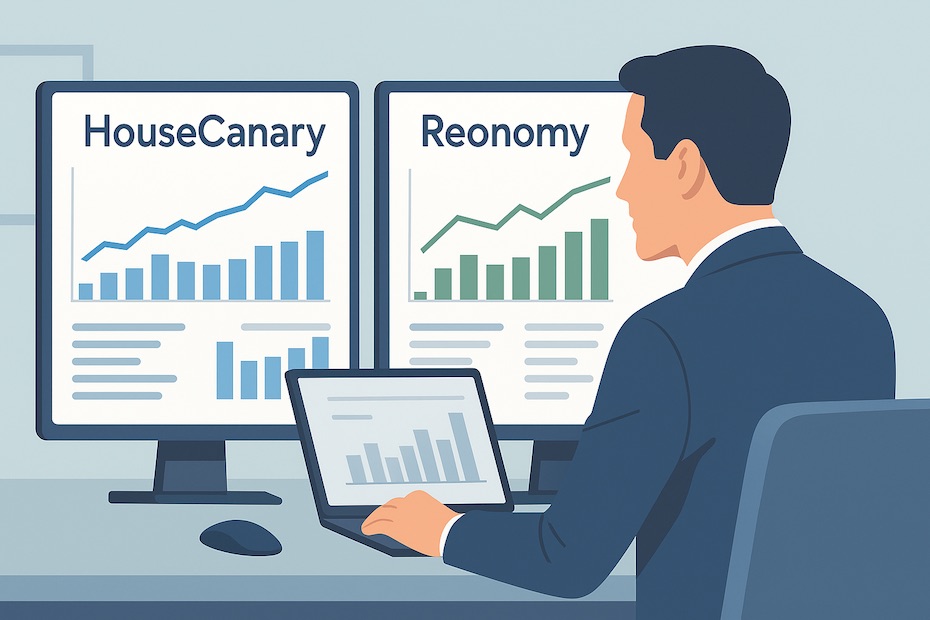
  • HouseCanary versus Reonomy in Predicting Property Valuation Trends

    HouseCanary versus Reonomy in Predicting Property Valuation Trends

    HouseCanary provides superior accuracy in residential property valuation forecasting, while Reonomy excels in commercial property intelligence and trend analysis through its extensive ownership and transaction datasets.

    In this article, you’ll learn how HouseCanary and Reonomy differ in their predictive capabilities, data coverage, and pricing structures. You’ll see which platform aligns better with your focus—residential or commercial—and how each tool can enhance your investment or lending strategy.

    What is HouseCanary best used for in property valuation?

    HouseCanary is best used for residential property valuations, forecasting home prices, rental projections, and generating detailed comparative analyses.

    When you enter a property address, HouseCanary provides an instant valuation report with price estimates, rental income potential, market forecasts, and comparable properties. These reports come with confidence scores and export options, making them practical for lenders, appraisers, and agents. Its models use nationwide MLS data, public records, and proprietary algorithms to deliver reliable estimates.

    For you, the real value comes in its proven accuracy. Independent testing shows that HouseCanary maintains error margins between 0% and 3.6%. That means you can confidently use it when evaluating single-family homes, townhouses, or rental portfolios where precision directly impacts profitability.

    What makes Reonomy stand out for commercial real estate?

    Reonomy stands out as a leader in commercial real estate analytics, offering detailed ownership, transaction, and property data.

    Its database includes over 50 million commercial properties and nearly 80 million ownership records. That scale allows you to identify property owners, review historical transactions, and find off-market opportunities that would otherwise be hidden. This depth is valuable for brokers, investors, and developers who depend on comprehensive intelligence for sourcing and deal-making.

    In practice, Reonomy simplifies the traditionally complex process of finding comparable sales in commercial markets. Instead of piecing together records manually, you access a clean interface that integrates sales comps, ownership transfers, and tax assessments. It enables you to make faster, evidence-based commercial investment decisions.

    How accurate is HouseCanary’s forecasting for residential markets?

    HouseCanary’s forecasting is considered highly accurate across U.S. residential markets, with consistently published performance results.

    The company’s valuation models are tested quarterly, with error margins kept below 3.6%. For instance, in Q3 2025, it reported national home price growth of 3%, with regions like Brunswick, Georgia showing increases of 7.1%. This level of detail allows you to spot both macro and micro trends with actionable precision.

    By using this forecasting, you can set more competitive listing prices, time acquisitions, and estimate rental yields with stronger confidence. For lenders, the predictive accuracy lowers default risk, while for investors, it raises portfolio stability.

    Which pricing model suits your usage: HouseCanary or Reonomy?

    HouseCanary uses a pay-per-report model, while Reonomy operates on a subscription basis.

    If you only need occasional valuations—say, for one-off residential deals or specific lending assessments—HouseCanary’s pay-per-report option is cost-effective. You pay only when you need data, and you receive a polished, professional output each time.

    Reonomy’s subscription is better suited for professionals engaged in daily or weekly commercial deal-making. Its value grows as you use it more frequently. For a brokerage team, subscription pricing justifies itself by replacing fragmented data sources with a unified platform.

    Do both platforms help with market trend timing and seasonal insights?

    Both platforms offer valuable insights into seasonal and cyclical market patterns.

    HouseCanary highlights fluctuations in residential listing volumes, pricing trends, and rental seasonality. This is critical if you’re timing acquisitions or setting rent schedules. Its dashboards make it easy to see how seasonal changes impact localized property demand.

    Reonomy provides commercial timing insights by analyzing transaction volumes, lease cycles, and capital flow trends across different sectors. If you need to anticipate when commercial assets might become undervalued or ripe for acquisition, Reonomy equips you with the trend history to guide those moves.

    Benefits of choosing HouseCanary

    When you select HouseCanary, you gain three direct advantages: speed, accuracy, and usability.

    Reports are generated within seconds, using clean visuals and export formats that you can share directly with stakeholders. Its confidence scoring adds credibility to valuations, a key factor in lending and investor presentations. The platform also refunds 100% if a report isn’t delivered within 24 hours, showing its service reliability.

    The accuracy range of 0–3.6% means fewer pricing mistakes and better risk mitigation in residential markets. Whether you’re evaluating rental yields, refinance options, or home price appreciation, HouseCanary equips you with actionable intelligence.

    Advantages of using Reonomy

    Reonomy gives you unmatched access to commercial property intelligence.

    Its biggest strength lies in ownership and transaction data. With a few clicks, you can identify who owns a property, when it last traded, and what comparable assets are selling for. This shortens your research cycle from weeks to minutes.

    As a commercial investor, you can uncover off-market opportunities that others miss, identify distressed assets, and map competitive positioning. For brokers, it means more listings and stronger deal sourcing. The subscription pricing works well for heavy users who analyze portfolios regularly.

    Performance comparison: Residential vs. Commercial focus

    HouseCanary and Reonomy serve different property domains, and the distinction matters.

    HouseCanary dominates in residential markets, giving you confidence when pricing single-family homes or assessing rental portfolios. It delivers precise forecasts that strengthen investment models and lending decisions.

    Reonomy dominates in commercial markets, equipping you with intelligence on office buildings, retail centers, industrial assets, and multi-family properties at scale. Its vast datasets allow you to track trends and discover ownership networks critical for growth.

    Investment strategy: Residential or Commercial?

    Your platform choice should align with your investment strategy.

    If you focus on residential assets, rentals, or lending decisions, HouseCanary is the better fit. Its fast valuations and predictive analytics let you act quickly on opportunities.

    If your portfolio leans toward commercial assets—retail, office, or industrial—Reonomy delivers the intelligence required for sourcing and negotiating deals. By matching the platform to your asset class, you ensure that the data supports your growth objectives.

    Which tool is better for predicting property valuation trends?

    • HouseCanary: Best for residential valuations, fast forecasting, and rental projections.
    • Reonomy: Best for commercial property intelligence, ownership data, and trend spotting.

    In Conclusion

    HouseCanary and Reonomy each hold unique strengths in property valuation analytics. HouseCanary stands out for its precision in residential forecasting, making it the go-to for single-family and rental portfolios. Reonomy distinguishes itself with unmatched commercial property intelligence, ownership data, and deal sourcing capabilities. By aligning your choice with your investment focus—residential or commercial—you ensure that predictive analytics work directly in favor of your strategy.

    For more insights on real estate valuation tools, investment strategies, and market intelligence, visit my profile at suneetsingalgiving.com.

  • Top 10 Performance Management Tools for Aligning Teams

    Top 10 Performance Management Tools for Aligning Teams

    You align teams effectively with performance management tools that integrate goals, feedback, and accountability into one transparent system.

    This article outlines ten leading performance management platforms designed to enhance alignment, engagement, and execution. You’ll understand each tool’s strengths, how they fit different organizational needs, and how to choose the right one to drive measurable results.

    What makes performance management tools essential for team alignment?

    You can’t rely on annual reviews or siloed spreadsheets if your aim is alignment. Modern performance management platforms provide real-time visibility into objectives, regular feedback loops, and progress tracking against KPIs.

    These tools ensure every employee knows what matters most and how their role contributes to strategy. With goals and progress visible across teams, accountability becomes shared, not isolated.

    By standardizing check-ins, reviews, and recognition, you turn performance management into a mechanism for strategy execution.

    1. Lattice

    Lattice streamlines performance reviews, OKRs, and engagement into one platform. It empowers managers with guided review cycles, automated reminders, and reporting dashboards.

    You can track individual goals directly against company objectives, making alignment measurable. Employees know where they stand, and leaders see organizational performance in real time.

    For mid-sized to enterprise companies, Lattice is effective in scaling review consistency and integrating career development into strategy execution.

    2. Leapsome

    Leapsome integrates OKRs, performance reviews, and learning in one interface. It’s built for organizations that want performance tied directly to employee growth.

    You can align strategy with employee development by combining goals with tailored training modules. Leaders maintain oversight while teams gain clarity on expectations and resources to improve.

    This dual focus on engagement and growth makes Leapsome ideal for organizations focused on retention and continuous performance improvement.

    3. PerformYard

    PerformYard gives you flexibility to design performance processes that match your company’s culture. It supports goal tracking, 360 reviews, and performance appraisals with customizable workflows.

    Executives appreciate its adaptability. You can run traditional annual reviews, frequent project-based assessments, or continuous feedback cycles—all tracked in one system.

    By avoiding one-size-fits-all models, PerformYard ensures alignment without sacrificing organizational identity.

    4. CultureAmp

    CultureAmp focuses on engagement analytics alongside performance. With surveys, benchmarks, and feedback tools, it helps leaders connect employee sentiment to business performance.

    You receive actionable insights that guide feedback conversations and organizational development. When employees feel heard, performance discussions become more productive and aligned with team goals.

    Its emphasis on analytics makes CultureAmp especially valuable for data-driven organizations wanting to link engagement directly with strategic outcomes.

    5. 15Five

    15Five emphasizes weekly check-ins, recognition, and goal tracking. It ensures alignment by surfacing issues before they grow into performance blockers.

    You get structured visibility into progress at every level—executives track KPIs while employees provide self-assessments tied to company objectives.

    Its lightweight, consistent cadence makes it effective for fast-moving organizations that need clarity without overwhelming managers with process.

    6. BambooHR

    BambooHR combines HRIS functionality with integrated performance management. Goals, reviews, and self-assessments feed directly into employee records.

    That linkage makes alignment easier across HR and management functions. Promotions, raises, and development plans are grounded in objective performance data.

    For organizations seeking both HR and performance capabilities in one system, BambooHR delivers efficiency and transparency.

    7. Small Improvements

    Small Improvements provides 360 feedback, one-on-one agendas, and lightweight performance reviews in a clean interface. It’s designed to encourage continuous dialogue.

    You use it to align performance through regular conversations supported by feedback data. Managers track growth, while employees know expectations remain current.

    Its simplicity makes adoption straightforward, especially for mid-sized companies scaling performance processes.

    8. Reflektive

    Reflektive delivers real-time feedback, goal tracking, and engagement surveys. It integrates with collaboration tools like Slack and Outlook to capture performance insights seamlessly.

    You align teams by embedding performance discussions where work already happens. That increases adoption and keeps feedback relevant.

    For organizations needing high-frequency insights, Reflektive provides the infrastructure to integrate goals and recognition into daily workflows.

    9. Teamflect

    Teamflect integrates directly with Microsoft Teams, offering performance reviews, OKRs, and feedback inside the collaboration tools your teams already use.

    You avoid friction because performance management happens within existing workflows. Leaders gain alignment data without requiring employees to switch platforms.

    For organizations deeply embedded in Microsoft 365, Teamflect makes alignment effortless and adoption natural.

    10. Centrical

    Centrical uses gamification, AI-driven coaching, and performance dashboards to engage employees and managers. It links day-to-day activities with strategic goals.

    Frontline teams benefit from real-time coaching and microlearning tied to performance tasks. Leaders see live performance data that connects execution to broader strategy.

    If your teams thrive on engagement and motivation, Centrical brings energy and accountability into performance management.

    Key Advantages of Performance Management Tools

    • Shared visibility into strategic goals across teams
    • Continuous feedback that reinforces alignment
    • Automated performance review cycles for consistency
    • Engagement analytics linked to outcomes
    • Increased accountability across departments

    What are the best performance management tools for aligning teams?

    • Lattice
    • Leapsome
    • PerformYard
    • CultureAmp
    • 15Five
    • BambooHR
    • Small Improvements
    • Reflektive
    • Teamflect
    • Centrical

    In Conclusion

    You align teams by deploying performance management tools that make goals transparent, feedback continuous, and accountability shared. Whether you prioritize engagement analytics (CultureAmp), workflow integration (Teamflect), or motivation (Centrical), these ten platforms ensure performance connects directly with strategy. Selecting the right platform strengthens execution and keeps your workforce unified.

    For more insights on organizational strategy, performance alignment, and workforce engagement, visit my profile at suneetsingalgrant.com.

  • 5 Best Financial Analytics Tools for Corporate Strategy

    5 Best Financial Analytics Tools for Corporate Strategy

    You enhance corporate strategy by using financial analytics tools that centralize data, accelerate forecasting, and provide actionable insights for smarter, faster decisions.

    This article outlines the five most effective financial analytics platforms every executive should consider. You’ll see how each tool supports scenario modeling, reporting, and planning—enabling you to translate financial data into strategic action.

    What should you expect from financial analytics software?

    Financial analytics software should give you real-time dashboards, integrated forecasting, and scenario modeling that aligns with corporate strategy. Static spreadsheets and manual reports are no longer sufficient at enterprise scale.

    With the right tool, you connect finance to operations, supply chain, and sales. That alignment ensures strategy is built on accurate, up-to-date information rather than lagging indicators.

    You also gain agility. Whether you’re stress-testing capital allocation or modeling revenue under new market conditions, these systems reduce decision time and boost confidence.

    How do financial analytics tools support corporate strategy?

    They ensure that executives base decisions on forward-looking analysis, not outdated reports. Planning cycles become continuous, with strategy adapting as conditions shift.

    Analytics platforms reveal cost inefficiencies, highlight revenue growth opportunities, and simulate risk scenarios. That allows you to position resources for maximum impact.

    By consolidating data across functions, the best tools turn fragmented insights into one source of truth—critical when aligning leadership decisions with execution.

    1. Workday Adaptive Planning

    Workday Adaptive Planning delivers budgeting, forecasting, and reporting in one system. Its ability to integrate with ERP and CRM platforms makes it ideal for companies with complex data environments.

    Executives use it to connect financial performance with operational drivers. For instance, you can tie sales pipeline data from Salesforce directly into forecasts, reducing surprises.

    The platform scales well as organizations grow, supporting both mid-sized companies and global enterprises. Its dashboards let you compare actuals against targets, ensuring strategy is tracked continuously.

    2. Anaplan

    Anaplan is a leader in connected planning. Its cloud-based Hyperblock engine allows real-time scenario modeling across finance, supply chain, sales, and HR.

    This tool is particularly strong for corporate strategy because it enables cross-functional alignment. If your finance team models a downturn, sales can simultaneously adjust targets and operations can reallocate resources.

    Executives value Anaplan for its agility. Instead of waiting for quarterly updates, you can re-model scenarios on demand, giving you the confidence to shift strategy in real time.

    3. Prophix One

    Prophix One unifies planning, budgeting, and reporting in a single environment. Its strength lies in automating repetitive finance tasks while enabling predictive analysis.

    Corporate leaders use it to streamline processes like intercompany accounting, reconciliations, and management reporting. By removing manual friction, Prophix frees finance teams to focus on strategy.

    It also enhances collaboration, allowing multiple departments to contribute to planning without losing consistency. For companies struggling with fragmented workflows, Prophix delivers cohesion.

    4. Jedox

    Jedox combines enterprise performance management with AI-driven forecasting. It consolidates planning, budgeting, and analytics across multiple business functions.

    Executives use Jedox to unify financial visibility across sales, HR, operations, and finance. That integration creates transparency, which is critical for strategy execution.

    Its AI features provide predictive forecasting, giving you better accuracy when planning for volatile markets. Jedox is particularly strong in complex global enterprises that need real-time collaboration across geographies.

    5. IBM Planning Analytics (TM1)

    IBM Planning Analytics, built on the TM1 engine, is designed for high-performance modeling. It handles large, complex financial data sets with speed and precision.

    You can run multi-dimensional analyses, simulate strategic shifts, and collaborate across teams without system lag. Its Excel integration makes adoption easier for finance teams while still providing advanced analytics.

    If your corporate strategy requires continuous forecasting across multiple business units, IBM TM1 provides the horsepower and flexibility you need.

    How should you evaluate which tool fits your company best?

    Your selection depends on your strategy priorities and financial maturity:

    • Scalable planning & integration → Workday Adaptive Planning
    • Real-time, cross-functional alignment → Anaplan
    • Finance process automation & reporting → Prophix One
    • AI-driven forecasting & transparency → Jedox
    • High-performance enterprise modeling → IBM Planning Analytics

    You should also consider implementation resources, integration capability, and adoption speed. The best software is the one your teams will use consistently to drive insight.

    Benefits of Using Financial Analytics Tools in Corporate Strategy

    • Consolidates financial and operational data into one source of truth.
    • Enables predictive forecasting and scenario modeling.
    • Accelerates decision-making with real-time dashboards.
    • Automates manual finance processes to free capacity.
    • Aligns corporate strategy with execution across business units.

    What are the best financial analytics tools for corporate strategy?

    • Workday Adaptive Planning
    • Anaplan
    • Prophix One
    • Jedox 
    • IBM Planning Analytics

    In Conclusion

    You elevate corporate strategy by implementing the right financial analytics platform. Tools like Anaplan and Jedox provide predictive modeling, while Prophix and Workday simplify planning and reporting. IBM TM1 adds enterprise-grade speed and flexibility. With these systems, you turn financial data into strategic intelligence that drives measurable results.

    For more insights on financial strategy, corporate planning, and analytics tools, visit my profile at suneetsingalscholarship.com.

  • PropTech Revolution: AI and VR Redefining Real Estate

    PropTech Revolution: AI and VR Redefining Real Estate

    AI and VR are transforming the real estate sector by enhancing property marketing, improving lead targeting, and creating immersive client experiences that drive faster decisions.

    This article explains how these technologies are reshaping your operations—from listing presentations to virtual tours to automated valuations. You’ll learn where to apply AI and VR right now to gain competitive traction, improve buyer confidence, and grow your business intelligently.

    What is PropTech, and how do AI and VR fit in?

    PropTech refers to technology platforms that optimize how real estate is bought, sold, marketed, and managed. AI (Artificial Intelligence) automates analysis, personalization, and forecasting, while VR (Virtual Reality) enables immersive property interaction without physical visits.

    You now operate in a market where speed, personalization, and digital access define success. With buyers expecting tailored recommendations and high-definition walkthroughs on demand, PropTech tools become critical to maintaining your relevance and lead quality.

    How does AI personalize the home search process?

    AI enables instant property matching based on a buyer’s behavior, preferences, and budget. Instead of browsing endlessly, clients receive curated recommendations that reflect their real intent.

    Platforms like Zillow, Redfin, and Nestopa integrate behavioral data—such as clicks, time-on-page, and saved searches—to refine suggestions. On the backend, you can use this intel to prioritize outreach and qualify leads before they even schedule a tour. Your conversion rates improve when recommendations feel intuitive and timely.

    What are the advantages of VR in real estate marketing?

    VR offers immersive home tours, allowing prospective buyers to explore interiors, zoom into features, and walk through rooms without ever leaving their couch.

    This creates stronger emotional connection, saves scheduling time, and expands your reach to remote or international clients. A Matterport survey found that 95% of buyers are more likely to call about properties with VR tours. It reduces decision friction and adds credibility to your listing presentations.

    You Save Time While Increasing Engagement

    Virtual staging, 3D walkthroughs, and automated descriptions reduce the time you spend preparing properties for market.

    Instead of coordinating photographers and interior designers, AI tools generate photo-realistic rooms instantly. With AI-powered CRMs, you also prioritize top leads using predictive scores, eliminating cold outreach and freeing time for high-value activities.

    • AI home matching boosts inquiry rates through relevance
    • VR tours cut time spent on-site with unqualified buyers
    • Virtual staging reduces listing prep from days to hours
    • Smart CRMs increase contact-to-close ratio
    • AI valuations help align expectations and reduce renegotiations

    What tools should you be using right now?

    To lead in this PropTech shift, you should actively use platforms that integrate AI and VR seamlessly:

    • Matterport: For 3D capture and VR walkthroughs
    • Zillow AI Tools: For recommendation algorithms and buyer prediction
    • Nestopa: For AI-generated descriptions and dynamic property pages
    • Virtual Stager: For interior design simulations
    • Redfin Estimate: For AI-driven pricing intelligence

    These platforms handle the heavy lifting on content creation, analytics, and virtual experiences—allowing you to scale without sacrificing quality or control.

    How does AI improve pricing and valuation?

    You no longer depend solely on manual comp comparisons. AI valuation models analyze location data, market velocity, property attributes, and even image quality to generate accurate price ranges.

    This strengthens your listing presentations by providing data-backed pricing logic. It also gives buyers confidence in offer strategy, as algorithms account for dozens of variables traditional agents often overlook. Tools like Redfin Estimate and HouseCanary lead this space.

    Can VR be used beyond home tours?

    Yes, you can also apply VR to agent training and buyer consultations. Brokers are using VR modules to onboard new hires, rehearse pitches, and simulate objection handling.

    VR meeting spaces are emerging for contract reviews and investor walkthroughs, saving travel time while maintaining interactivity. This brings enterprise-level polish to your operations without physical infrastructure.

    How do AI and VR improve client satisfaction?

    Buyers feel understood when they receive timely, relevant options. Sellers are impressed when their homes are staged and priced using tech-backed methods. And international clients are more likely to move forward after an immersive VR showing than from static photos.

    When you deploy these tools properly, you reduce the friction, increase decision speed, and differentiate your brand as tech-forward.

    How are AI and VR transforming real estate?

    • AI powers personalized search and smart valuations
    • VR delivers immersive virtual tours and remote staging
    • Agents save time and close deals faster using PropTech

    In Conclusion

    You’re not just selling properties—you’re delivering digitally driven, client-first experiences. By implementing AI and VR across listing, pricing, and client engagement workflows, you cut inefficiencies, increase engagement, and build trust faster. Real estate success now depends on smart adoption of PropTech, and the best results come when you lead that transformation—not follow it.

    For more insights about how AI and VR are transforming real estate through immersive tech and smart automation, please visit my Facebook Profile.

  • Green Buildings, Profitable Returns: Sustainable Real Estate Trends

    Green Buildings, Profitable Returns: Sustainable Real Estate Trends

    Green buildings are no longer just a responsible choice—they’re a profitable one. They lower operational expenses, command higher rents, and deliver stronger asset value across both new construction and retrofits.

    This article gives you a real-world breakdown of how sustainable real estate drives financial performance. From reduced energy costs to increased tenant retention and superior ROI, you’ll gain a practical playbook for capitalizing on green building trends in today’s market.

    What financial gains do green buildings offer?

    You’re not just saving the planet—you’re also optimizing the bottom line. Certified green buildings cut utility costs by 25–30% on average, with energy consumption down 40–50% in high-efficiency builds. According to the U.S. Green Building Council, these savings translate to 14–30% lower operating costs annually.

    The long-term payoff compounds. A green development may cost 6–7% more upfront, but it typically delivers a 10–15% return on investment over time. In many commercial retrofits, you recover capital within 1–5 years. That capital efficiency puts your building in a better position to compete in a market where efficiency is no longer optional.

    Do tenants pay more to lease green-certified space?

    Yes—consistently. LEED-certified and BREEAM-compliant office buildings command rent premiums between 13–36%, depending on market and location. Research from CBRE and Harvard Business Review confirms this trend holds across Class A and institutional portfolios.

    You also benefit from higher retention. Tenants—especially ESG-focused corporations—prefer green-certified spaces. With longer lease durations and fewer vacancies, your property generates reliable cash flow with lower marketing and turnover costs. That operational stability is a direct value multiplier.

    What is the global growth trajectory of green real estate?

    The global green building market is forecast to double from USD 683 billion in 2024 to over USD 1.4 trillion by 2032, growing at nearly 10% CAGR. In the U.S., demand is outpacing supply—particularly in urban multifamily and high-end commercial sectors.

    Investors are also following this trend. BlackRock, Goldman Sachs, and Brookfield Asset Management all now prioritize ESG-certified assets in their real estate portfolios. The result? A liquidity boost for green properties, higher trading multiples, and broader capital access—especially from institutional funds.

    What does the cost versus payoff timeline look like?

    You should treat green construction like a compounding asset. Development costs run 6–7% higher than standard builds. But within 24–36 months, those upfront premiums are recovered through reduced energy bills, lower water usage, and decreased maintenance.

    Over a 20-year horizon, the lifecycle value exceeds the original investment by 4–6x. That’s driven by:

    • Energy savings of 40–50%
    • Water consumption down by 30–35%
    • Maintenance expenses cut by 20%
    • Higher building occupancy and fewer capital repairs

    Whether you’re structuring a long-term hold or planning an exit, those operational efficiencies preserve cash flow and protect valuation through market cycles.

    How do certifications boost property valuation?

    LEED, WELL, and BREEAM certifications now function as valuation accelerators. According to the Journal of Portfolio Management, certified assets enjoy transaction premiums of 21% compared to non-certified counterparts, and rent premiums of up to 18%.

    Lenders and underwriters increasingly associate certification with lower risk. Green properties often qualify for better debt terms, green bonds, or PACE financing—giving you more flexibility and leverage in capital structuring. This is no longer a “nice-to-have” badge; it’s a pricing signal in global markets.

    What are real-world examples of profitable green buildings?

    If you’re looking for proof of performance, the Bullitt Center in Seattle is often cited as the gold standard. It produces more energy than it consumes and has virtually zero utility bills. Tenants benefit from enhanced workplace health, and the building remains fully occupied.

    In India, the state of Rajasthan retrofitted over 600 government buildings with green measures. Post-implementation, energy use dropped by 40–50% and water by 30–35%, with the entire cost recouped in under 18 months. That’s not innovation for innovation’s sake—it’s financial optimization at scale.

    Why are developers prioritizing sustainable projects now?

    You’re not alone if you’re shifting capital toward sustainability. More than 63% of real estate investors now say ESG-aligned assets offer superior long-term performance, according to JLL’s global investor sentiment survey.

    Developers are responding with action. In 2024, over 40% of new office buildings broke ground with LEED or WELL pre-certification. That’s a material shift in how institutional-grade real estate is planned, financed, and positioned. The market isn’t waiting—nor should you.

    Primary financial incentives for sustainable real estate

    Green buildings aren’t just an ESG checkbox—they outperform in key business metrics:

    • 14–30% lower operating costs through energy and water efficiency
    • 13–36% rental premiums and improved tenant retention
    • 21% higher resale value for certified properties
    • Fast payback periods—often under two years
    • Increased access to ESG capital and preferential lending

    These factors make green buildings not only environmentally strategic, but also financially superior in cash flow, financing, and exit value.

    What makes green buildings more profitable?

    • Lower energy and water bills
    • Higher rent and occupancy rates
    • Greater resale value
    • Access to ESG financing
    • Fast ROI from retrofits

    In Conclusion

    Green real estate has matured into a profit-driven strategy with measurable upside. You gain rent premiums, save on operations, attract long-term tenants, and secure superior resale outcomes—all while aligning with ESG mandates. As markets move toward regulation and sustainability benchmarks, properties that don’t meet environmental standards risk obsolescence. Investing in green buildings now protects your margins, grows your portfolio’s value, and ensures relevance in a market defined by performance and responsibility.

    For more insights about sustainable real estate, ESG investing, and high-yield green property strategies, please visit my Facebook Profile.

  • 5 Essential Marketing Tools for Growing Your Small Business

    5 Essential Marketing Tools for Growing Your Small Business

    The most effective marketing tools for small businesses combine automation, analytics, content creation, and customer engagement in one streamlined stack. Leveraging the right software can boost your reach, improve conversions, and help you scale efficiently without stretching your resources.

    In this article, you’ll gain a decisive breakdown of five essential marketing platforms that every small business should integrate. Each tool is selected based on real user needs, scalability, and return on marketing investment. This is a performance-focused guide tailored to help you implement real growth—not theoretical suggestions.

    1. HubSpot for All-in-One Marketing Management

    HubSpot is your foundation for managing inbound marketing, sales automation, and customer relationships under one system. Its value lies in centralizing data so you can make smarter, faster decisions.

    You’ll benefit from HubSpot’s CRM, email campaign builder, form automation, and content tools—especially the free tier, which provides extensive capabilities. It also integrates with over 1,000 apps, giving you flexibility without complexity. Startups often underestimate how fragmented their data becomes without a system like HubSpot to tie it together.

    Its automation flows for lead nurturing and customer journeys help reduce your manual workload while maintaining consistent user experiences. You can monitor campaign performance, website traffic, and lead conversion without leaving the dashboard.

    2. Canva for Fast, On-Brand Visuals

    You don’t need a full-time designer to maintain brand consistency across digital channels. Canva makes it possible to create social media graphics, infographics, email headers, and presentations that align with your brand.

    Its drag-and-drop interface is beginner-friendly, and its brand kit feature lets you set fonts, colors, and logos that automatically apply across assets. The platform also includes AI features like Magic Design and Magic Write, allowing you to automate content formatting and copywriting prompts.

    With the Pro plan, you can access advanced features like background remover, scheduling tools, and team collaboration—all of which cut down creative turnaround times.

    3. Google Analytics 4 for Real-Time Audience Behavior

    To drive growth, you need to know exactly how users engage with your content—and where they drop off. Google Analytics 4 (GA4) gives you real-time data across website traffic, user engagement, and conversion paths.

    Unlike older versions, GA4 is event-based, which means you can track custom user behaviors with precision. It integrates directly with Google Ads, Search Console, and Data Studio for full funnel analysis. As a small business, these insights let you refine campaigns in real-time and avoid wasting budget.

    GA4’s predictive analytics also help you identify high-value audiences and estimate churn probabilities. When you’re managing a lean operation, this level of foresight can guide every growth decision.

    4. Mailchimp for Automated Email Campaigns

    Email marketing consistently delivers the highest ROI among digital marketing tactics. Mailchimp simplifies automation, segmentation, and testing to help you deliver personalized content at scale.

    The platform’s journey builder makes it easy to design triggered campaigns for onboarding, cart recovery, or re-engagement. Its smart recommendations and A/B testing tools are ideal for improving open and click-through rates.

    You can also create signup forms, manage landing pages, and schedule social posts—all within the Mailchimp ecosystem. Its seamless integration with eCommerce platforms like Shopify and WooCommerce is especially valuable for product-based businesses.

    Here’s what makes it a top-tier small business tool:

    • Drag-and-drop email designer
    • Pre-built customer journeys
    • Real-time campaign analytics
    • Seamless eCommerce integration
    • Smart segmentation based on behavior

    5. SEMrush for SEO and Competitor Intelligence

    Ranking on search engines is one of the most cost-effective ways to generate consistent inbound traffic. SEMrush equips you with the SEO and competitor research capabilities to do that effectively.

    You can analyze keyword volume, domain authority, backlink profiles, and content gaps across your niche. The platform’s SEO Writing Assistant grades your content against Google’s top-performing pages, ensuring that each blog post is optimized before you publish.

    Its competitive analysis tools help you monitor what rivals are ranking for and how their traffic sources evolve. That kind of market awareness allows you to adjust your content strategy proactively.

    What Features Should I Prioritize When Choosing Marketing Tools?

    You should prioritize integration, automation, scalability, and data transparency in your marketing stack. A tool should help you eliminate friction—not add another layer of complexity.

    Avoid marketing software that operates in silos. Choose platforms that talk to each other and support native integrations. Make sure reporting features are not buried in premium tiers or hidden behind steep learning curves. The faster you can act on data, the more you can optimize your strategy for performance.

    Best marketing tools for small businesses include

    • HubSpot: CRM & automation
    • Canva: Design & branding
    • GA4: Website analytics
    • Mailchimp: Email marketing
    • SEMrush: SEO research

    In Conclusion

    To compete in today’s fragmented market, you need marketing tools that multiply your time, sharpen your focus, and deliver measurable ROI. These five platforms—HubSpot, Canva, GA4, Mailchimp, and SEMrush—give you tactical leverage across content, data, email, and SEO. Implement them strategically, and you’ll strengthen every customer touchpoint with clarity and control.

    For more insights on marketing strategies, digital growth tools, and entrepreneurial resources that I personally use and recommend, please visit my Facebook Profile.